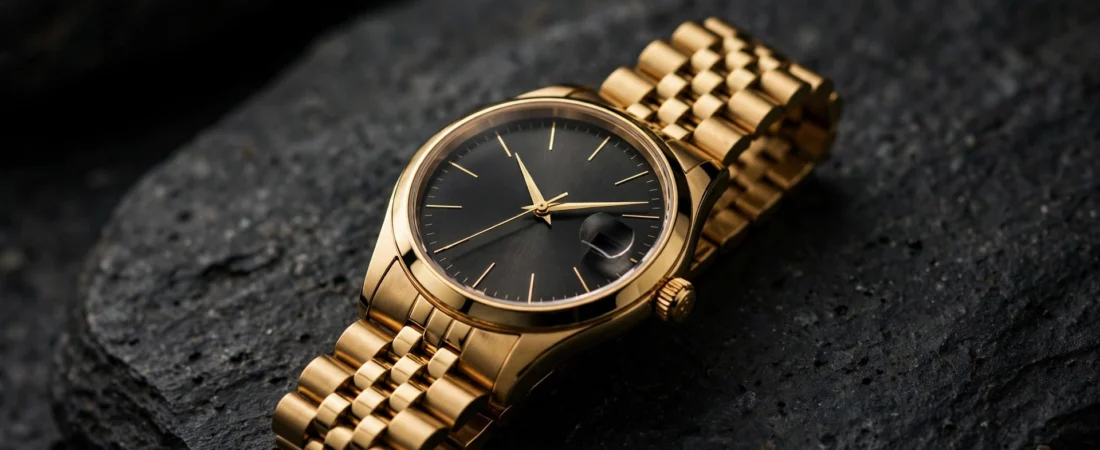
A luxury watch buying guide should start with the truth — a fine watch is the most personal machine you will ever own, worn daily and wound by your own movement.
A fine watch is the most personal machine you will ever own — worn daily, wound by your own movement, and capable of outliving you by generations. Buying your first (or fifth) deserves more than brand buzz. Here are the eight things that actually matter.
Luxury Watch Buying Guide: 1. Understand the Movement
The movement is the engine. Mechanical (automatic) movements are tiny marvels of engineering, powered by your wrist — no battery, ever. Quartz is more accurate and affordable but lacks soul for most enthusiasts. For a first luxury watch, an automatic from a respected maker is the classic choice.
Luxury Watch Buying Guide: 2. Buy the Seller Before the Watch
Authorized dealers and established pre-owned specialists offer authenticity, warranty, and service history. A luxury watch is a decades-long relationship — the seller’s reputation matters as much as the brand on the dial.
3. Size it to your wrist, not the trend
Oversized watches come and go; proportion is forever. The lugs should not overhang your wrist, and the case should slide under a cuff without a fight. For most wrists, 36–40mm is the timeless zone.
4. Choose versatility first
Your first luxury watch should work with a suit and a sweater. A clean dial, moderate size, and a bracelet or strap in a neutral tone cover nearly every occasion. Save the bold pieces for later in the collection.
5. Learn the language of value
In-house movements, finishing quality (look at the edges and screws under magnification), and brand heritage drive long-term value more than hype. Watches bought for love tend to hold value; watches bought for investment rarely do.
6. Consider pre-owned seriously
The pre-owned market offers discontinued references, better prices, and watches with history — all authenticated and serviced by reputable dealers. Many collectors buy pre-owned exclusively.
7. Budget for service, not just purchase
A mechanical watch needs servicing every 5–7 years, costing a meaningful fraction of its price. Factor it in from the start — a maintained watch runs for generations; a neglected one does not.
8. Trust your wrist
Specifications inform, but the wrist decides. Try watches on, wear them around the store, notice which one you keep glancing at. The right watch chooses you as much as you choose it — you will know.
One luxury watch buying guide truth: the best watch is the one you actually wear. A luxury watch buying guide that focuses only on investment value misses the point — a watch sitting in a safe is a missed opportunity. Wear it, enjoy it, and let it become part of your story.
A luxury watch buying guide for 2026 must mention the pre-owned market honestly. Authorized dealers and established pre-owned specialists offer authenticity, warranty, and service history — all at better prices than retail. The pre-owned market is where discontinued references and watches with history live.
The Takeaway
Buy from someone reputable, size for your wrist, choose versatility, and let your own taste lead. A luxury watch bought this way is not an expense — it is a companion. And decades from now, when it ticks on someone else’s wrist, they will know it was chosen with care.
If this luxury watch buying guide has you ready to choose, our fine jewelry buying guide covers the other timeless purchase, and our quiet luxury decor ideas bring the same restraint to your home. Hodinkee’s seven questions to ask before buying a vintage watch is essential reading for the pre-owned market.