Modern Home Details That Make a Big Difference
Discover the small, high-impact architectural and interior details that give modern luxury homes their distinctive polish.
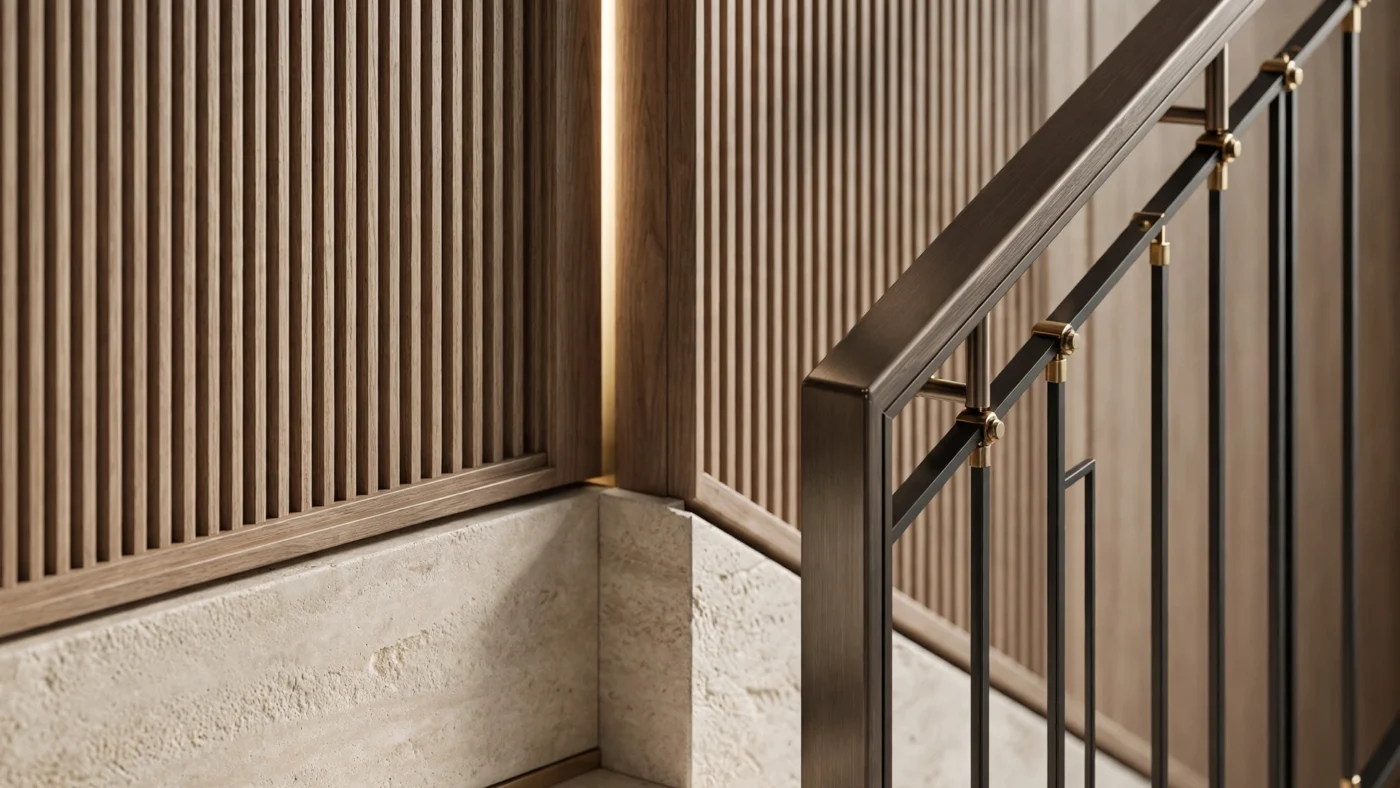
In the world of high design, perfection is composed of small details executed with consummate mastery. While guests may not immediately identify every subtle nuance, their subconscious registers a profound sense of completeness and quality.
Which modern home details actually move the needle? The ones your hand touches and your eye grazes a hundred times a day — door hardware, transitions, switches, edges. This guide expands the ideas above with more modern home details that quietly separate exceptional houses from ordinary ones.
Shadowline Plaster Reveals
Standard crown molding and traditional baseboards can feel heavy in modern architecture. Leading designers replace them with Reglet reveals—a small half-inch recessed aluminum channel between the drywall and the floor or ceiling that creates the illusion that walls are floating weightlessly.
Concealed Magnetic Door Catches
Eliminate loud, clattering metal latch strikes on interior doors. Modern luxury doors employ concealed magnetic latches that remain flush within the door edge until the door swings shut, engaging with a satisfying, whisper-quiet magnetic thud.
Integrated Vent Registers
Replace generic stamped metal HVAC floor registers with flush-mount registers crafted from the exact same wood planking as your hardwood floor. They integrate seamlessly with zero visible disruption.
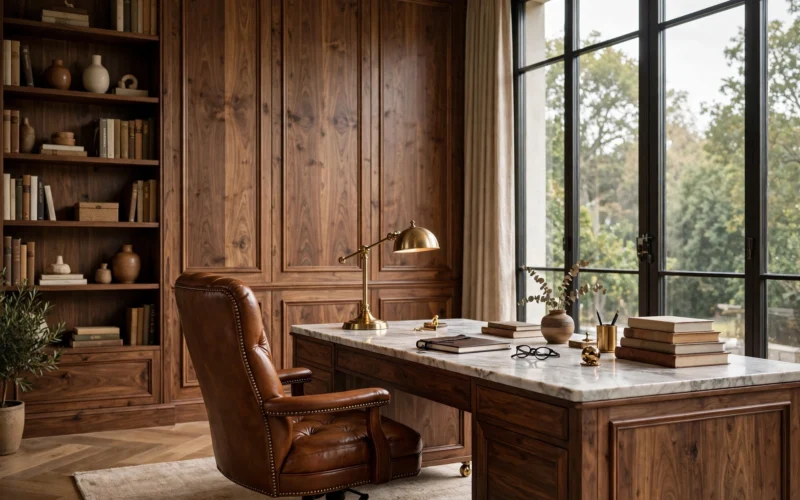
Curated Bookshelf Curation
Do not pack bookshelves to the brim. Interlace vertical stacks of hardcovers with horizontal arrangements, leaving space for ceramic vessels, framed photography, and tactile stones to create an inviting, breathable library.
Door Hardware: The Handshake of Every Room
Door levers are among the most-touched objects in any house, yet they are often an afterthought. In well-considered modern home details, every lever, knob, and pull shares one finish and one design language — unlacquered brass that patinas gracefully, or matte black for graphic contrast. Weight and action matter as much as looks: solid forged brass with a smooth, silent mechanism feels expensive every single time. For the craft tradition behind these fittings, see door furniture on Wikipedia.
Extend the same thinking to cabinet pulls, window handles, and even flush plates. Consistency across every touchpoint is what makes modern home details read as intentional rather than accidental.
Switch Plates, Outlets, and the Art of Disappearing
Standard plastic switch plates shout “builder grade” in otherwise refined rooms. Upgrade to screwless plates in finishes that match the wall — or better, paintable plates that vanish entirely. Position outlets horizontally within the baseboard, or hide them inside cabinets and floor boxes. These are humble modern home details, but their absence of visual noise is profoundly felt.
Thresholds and Transitions Between Materials
Where wood meets stone, or tile meets carpet, the transition reveals the builder’s care. Flush transitions with slim metal profiles in brass or blackened steel look tailored; clunky beveled strips look cheap. Align transitions with door swings or architectural lines so they feel inevitable. Even grout color is a detail worth deciding: matching grout creates a calm monolithic field, while contrasting grout draws a graphic grid — choose deliberately.
Paint Finishes: Sheen Is a Detail Too
Color gets the attention, but sheen does the quiet work among modern home details. Flat paint on walls hides imperfections and looks velvety; satin or eggshell on trim creates a subtle contrast that reads as custom. In kitchens and baths, a washable matte keeps things practical without the glare of semi-gloss. Paint the ceiling a shade lighter than the walls — never stark white in a warm room — and always sample large swatches in the actual light. These small decisions compound into the polished finish that defines considered modern home details.
Common Mistakes: Modern Home Details Done Wrong
- Mixed metal finishes. Chrome here, brass there, nickel somewhere else — the fastest way to make modern home details feel random. Commit to one or two metals throughout the house.
- Sloppy caulk lines. Ragged caulk around tubs, windows, and trim undermines every expensive finish nearby. Crisp, minimal caulk lines are a hallmark of careful work.
- Ignoring the backs of doors. Guests see them; you see them daily. Paint them properly and fit quality hardware on both sides.
- Cheap-feeling switches. A flimsy plastic rocker betrays a beautiful room. Solid, well-damped switches with a satisfying action cost little and feel luxurious.
- Forgetting utility spaces. The laundry room and garage deserve the same care. A home that is refined everywhere feels genuinely considered; one that is refined only in the living room feels like a stage set.
Frequently Asked Questions
Which modern home details give the best return on investment?
Door hardware, switch plates, and lighting controls — the high-touch, high-visibility items. Replacing every lever and plate in an average home costs far less than one piece of furniture and transforms how the whole house feels.
How do I choose a metal finish?
Pick one dominant metal and use it everywhere: unlacquered brass for warmth, matte black for contrast, polished nickel for a classic look. A second metal is fine as an accent if it appears at least three times. Random mixing is what to avoid.
Can renters upgrade these details?
Many of them, yes. Swap cabinet pulls and switch plates (keep the originals to reinstall), upgrade the shower head, and add adhesive under-cabinet lighting. These reversible changes make modern home details feel custom even in a rental.
How much should I budget?
A whole-house hardware and plate refresh typically runs from a few hundred to a few thousand dollars depending on quality — among the cheapest transformations in interior design, with an outsized impact on perceived quality.
Conclusion
When every detail—from door latches to air registers—is addressed with care, the entire home vibrates with architectural harmony.