The Materials That Instantly Make a Room Feel More Luxurious
From honed Calacatta Viola to tactile bouclé and unlacquered brass, discover the noble raw materials that define the modern luxury interior canon.
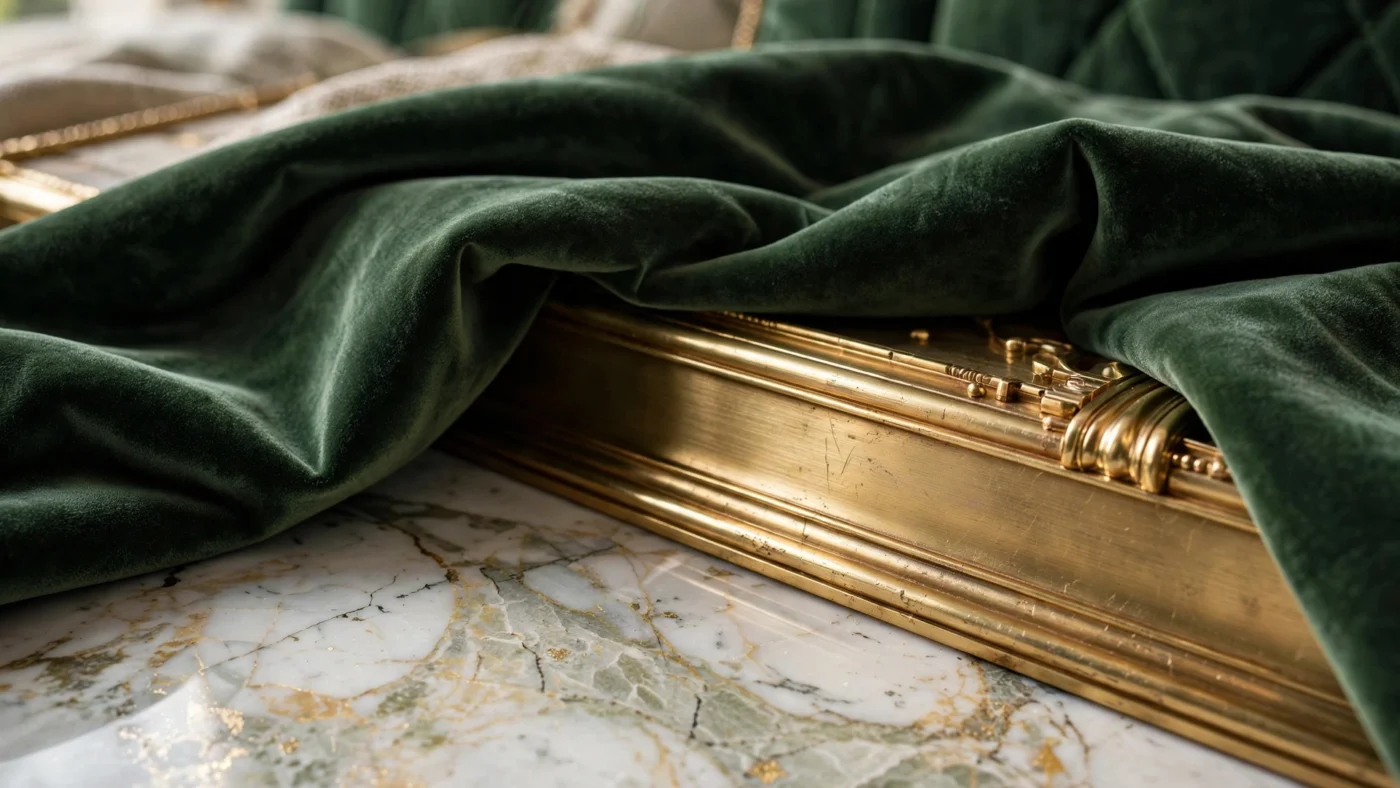
Some rooms simply feel more luxurious than others, and the difference is almost always material. Before a single piece of furniture is chosen, the stone, metal, wood, and textile palette sets the ceiling for how rich a space can feel. This guide breaks down the noble materials designers reach for when a room must feel unmistakably high-end.
Materials are the vocabulary of interior design. Just as words convey tone and emotion, the surfaces that envelope a room communicate pedigree, warmth, and permanence. Understanding how noble raw materials behave under light and touch is the foundation of high-end home decoration.
Natural Stone with Dramatic Geological Veining
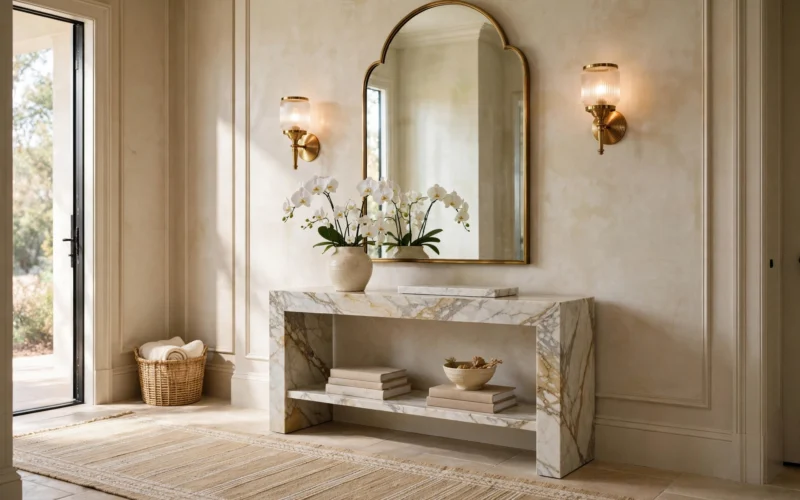
While polished white marble remains a classic staple, modern luxury interiors have pivoted toward honed, expressive natural stones that celebrate geological drama. Stones such as Calacatta Viola with its deep burgundy breccia, French Pierre de Bourgogne limestone, and Brazilian quartzite serve as living sculptural paintings within the home.
Honing rather than high-gloss polishing softens the stone’s tactile surface, creating a matte, velvety texture that diffuses light rather than creating harsh glare. Whether utilized as a floating monolithic vanity, a monolithic waterfall kitchen island, or a full-slab fireplace surround, rich natural stone grounds an interior in undeniable permanence.
Aged and Unlacquered Living Metals
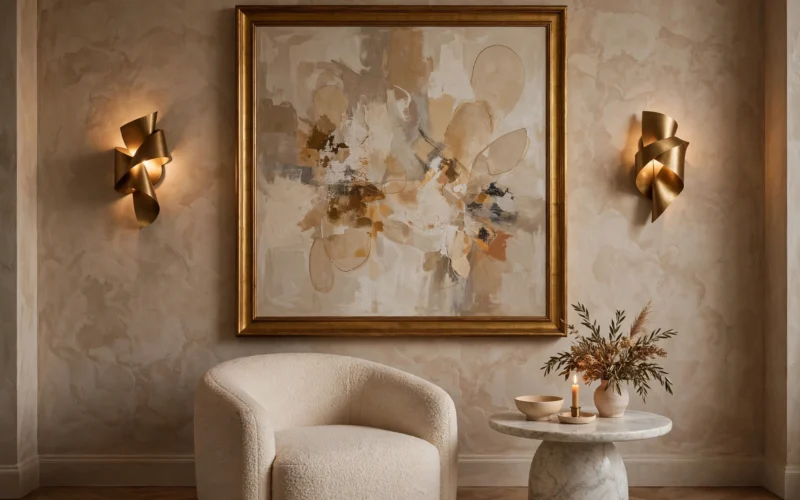
The hallmark of commercial mass manufacturing is shiny, lacquered metal finishes engineered never to change. By contrast, true luxury interior designers insist on living finishes—primarily unlacquered brass, hand-rubbed oil-rubbed bronze, and burnished gunmetal.
As these metals are touched by human hands and exposed to oxygen, they oxidize unevenly, developing a soft, organic patina unique to your household’s daily rhythms. This subtle transformation connects the architecture to time itself, a hallmark of heritage estates.
Design Rule: The Tactile Rule of Three
Ensure every formal room incorporates at least three contrasting natural textures: one cool and geological (stone or metal), one warm and organic (timber or leather), and one soft and absorbing (linen, wool, or silk velvet).
Architectural Timber: White Oak and American Walnut
Timber provides essential soul and warmth. The most sophisticated residential spaces employ rift-sawn or quarter-sawn white oak and rich American black walnut. The tight, linear grain of rift-sawn timber lends an air of bespoke Scandinavian or Japanese minimalism, while continuous grain-matched walnut cabinetry imparts mid-century glamour.
Textiles of Distinction: Cashmere, Wool Bouclé, and Raw Linen
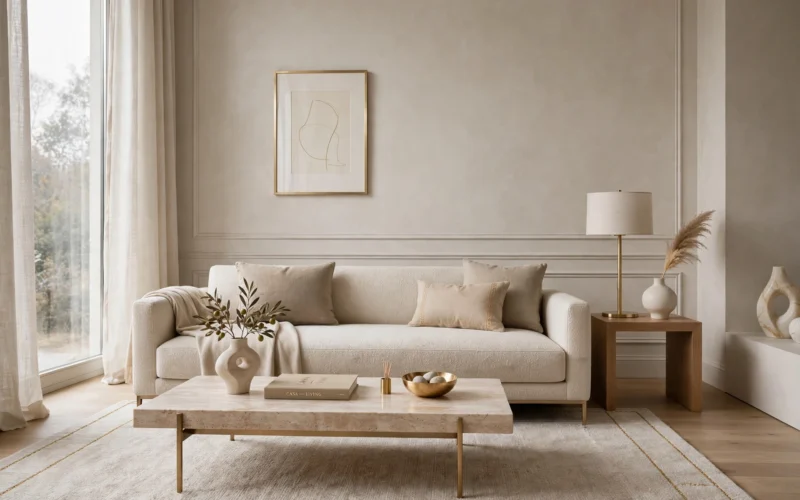
When selecting soft furnishings, avoid synthetic polyester blends. Natural fibers breathe, drape naturally, and age with dignity. Layering a dense Belgian linen sofa with cashmere throws and tactile alpaca wool bouclé cushions creates an irresistible invitation to slow down and savor your environment.
Conclusion
The materials you choose dictate the physical and emotional character of your sanctuary. By anchoring your home in stone, noble woods, living metals, and honest fibers, you create a space of timeless indulgence that deepens in beauty year after year.
Why Natural Materials Feel More Luxurious
Synthetic surfaces are engineered for perfection, and perfection reads as cheap — the eye detects the absence of variation instantly. Natural materials feel more luxurious because they carry evidence of their making: veining in stone, grain in timber, slubs in linen, the uneven glow of hand-rubbed metal. This honest imperfection is what the brain registers as value.
Natural materials also age with dignity. Marble softens, brass deepens, leather burnishes — while laminates and plastics simply wear out. Choosing materials that grow more beautiful with time is the defining habit of luxury specification.
Glass and Mirror: Light as a Material
Glass earns its place through light manipulation. Antiqued mirror panels — foxed, smoked, or gently distressed — add depth and history that flat modern mirror cannot. Fluted glass on cabinet fronts diffuses light beautifully while obscuring clutter.
Use mirror strategically: opposite a window to double daylight, or as a wall in a small dining room to dissolve boundaries. These quiet moves make rooms feel more luxurious without adding a single object.
Leather and Hide: Warmth That Feels More Luxurious
Few materials signal comfort like genuine hide. Full-grain aniline leather — the least processed grade — develops a rich patina with use, growing softer and more lustrous over decades. A well-made leather chair grounds a room with warmth fabric alone cannot provide.
Specify leather where bodies meet it: dining chairs, ottomans, headboards. The touch-test never lies — if a material feels wonderful under your palm, it will make the whole room feel more luxurious.
Mixing Materials: The Designer Formula
Luxury comes from contrast, not expense. The reliable formula: pair one cool, hard material (stone, metal, glass) with one warm, organic one (timber, leather) and one soft, absorbing one (linen, wool, velvet). This triad creates the tactile tension that reads as richness — the reason designer rooms feel more luxurious than the sum of their parts.
Repeat each material at least twice per room so the palette feels intentional, and limit the total to four or five. Marble, walnut, brass, linen, and wool feels curated; twelve competing surfaces feels like a sample sale.
Feel More Luxurious: Frequently Asked Questions
Which single material upgrade has the biggest impact?
Natural stone — even in a small dose. A marble threshold, a travertine side table, or a stone fireplace surround introduces geological depth that will make any room feel more luxurious.
Are engineered materials ever acceptable in luxury interiors?
Yes, when honestly used. High-quality engineered quartz in a hardworking kitchen can be smart — luxury is about performance and beauty, not snobbery about provenance.
How do I mix metals without chaos?
Choose one dominant metal and one quiet accent, then repeat both. Unlacquered brass with blackened bronze is the classic pairing that always feels intentional.
What materials should I avoid?
Anything that imitates poorly: plastic “marble,” photo-printed “wood,” shiny fake brass. If the budget doesn’t stretch to the real thing, choose an honest alternative — painted wood, honed concrete, matte black steel — over cheap imitation.