Luxury Technology for a More Sophisticated Home
Discover how invisible smart home ecosystems, circadian lighting, and climate purification transform residential architecture.
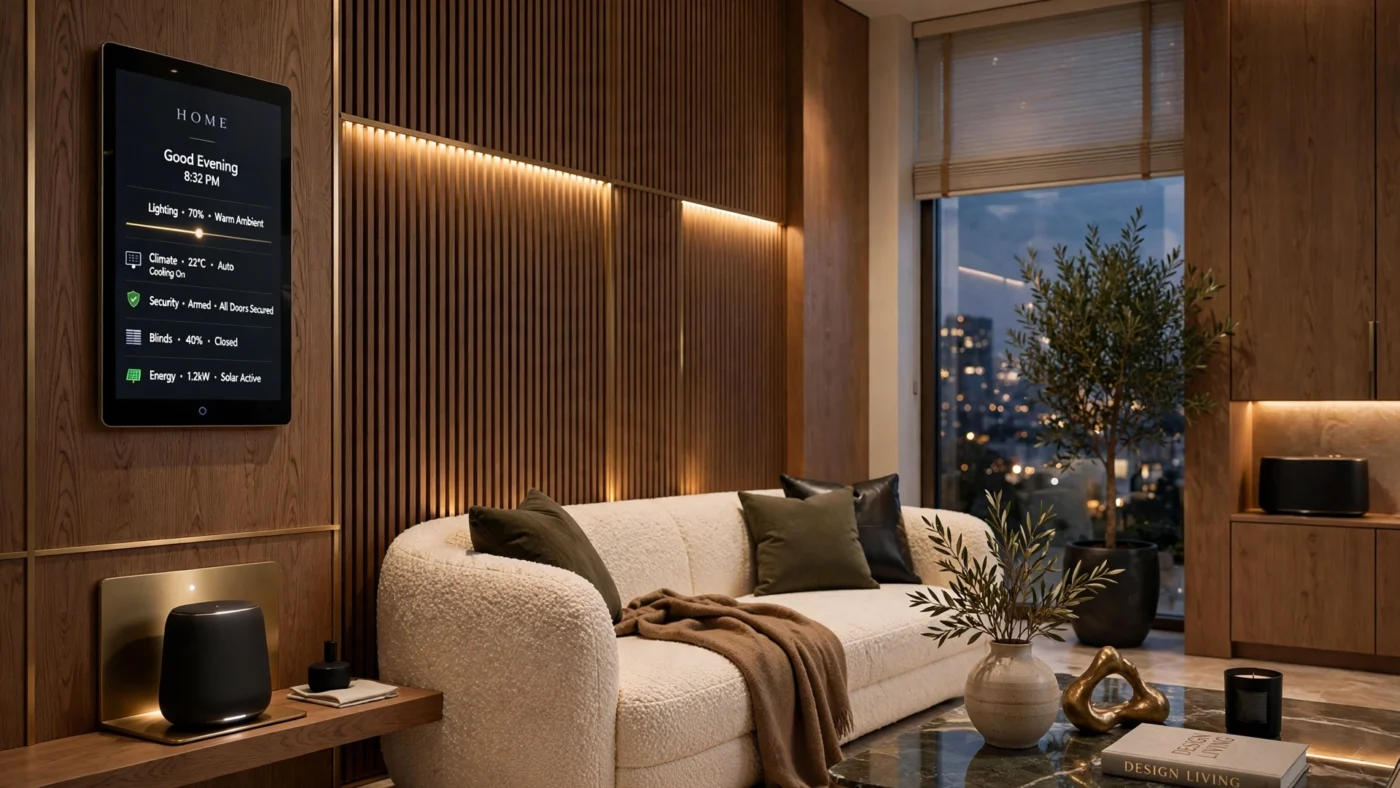
Sophisticated technology in a luxury home should whisper, never shout. The era of complex touch panels with dozens of confusing buttons is over; the future belongs to ambient, context-aware systems that anticipate your needs seamlessly. This is the essence of true luxury technology — power that never demands attention.
Circadian Dynamic Lighting Automation
Humans are biologically synchronized with the sun. Sophisticated home automation systems (like Ketra and Lutron HomeWorks) utilize full-spectrum LED fixtures that smoothly shift both color temperature and intensity throughout the 24-hour cycle.
Wake up to warm, energizing morning amber, transition to crisp, high-focus 5000K daylight during productive work hours, and gradually dim to rich 1800K candle glow after twilight to stimulate natural melatonin production and deep restorative sleep.
Architectural Invisible In-Wall Speakers
For design purists who refuse to disrupt custom plaster walls with visible black speaker grilles, invisible speakers (such as Sonance and Stealth Acoustics) represent a triumph of engineering. These planar transducers are installed flush within drywall studs and skimmed directly over with drywall compound, paint, wallpaper, or wood veneer.
Sound radiates directly through the wall surface with wide dispersion, bathing the residence in high-fidelity sound while remaining 100% invisible.
System Integration Standard
Insist upon unified protocols (such as Matter and KNX/Crestron) that combine lighting, HVAC, shading, and security into a single, intuitive interface.
Hospital-Grade Clean Air Systems
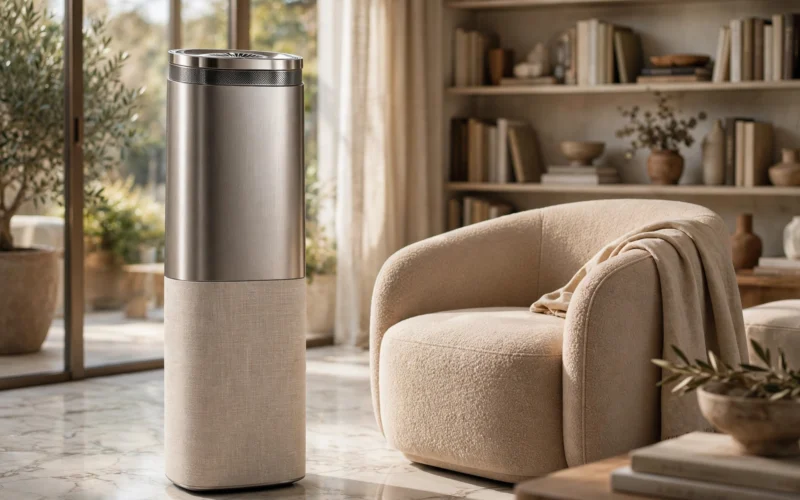
Indoor air quality is paramount for cognitive health. Systems such as Swiss IQAir Perfect 16 integrate directly into the home’s central HVAC ductwork, utilizing medical-grade micro-fiber filtration to capture ultrafine pollutants, allergens, and airborne viruses down to 0.003 microns without restricting airflow.
How to Plan Luxury Technology for a Sophisticated Home
When planning luxury technology, begin with lifestyle rather than equipment. Map a typical week: which rooms are occupied and when, how natural light is used, where privacy matters most. This lifestyle brief becomes the design document your integrator works from. Engage professionals before construction begins — retrofitting invisible speakers, circadian lighting, and clean-air ductwork costs multiples more once walls are closed. Insist on a single unified platform so lighting, climate, shades, and security respond to one elegant interface instead of five competing apps.
Budget in layers. Allocate the core investment to infrastructure — wiring, network capacity, and electrical panels — that serves for decades. Next, fund the visible interfaces such as keypads and lighting fixtures that define daily experience. Finally, budget for electronics that will naturally evolve. Great luxury technology is roughly seventy percent invisible infrastructure and thirty percent visible delight.
Common Mistakes When Choosing Luxury Technology
The most expensive mistake is choosing gadgets over systems. A standalone smart thermostat cannot coordinate with shades and lighting the way an integrated platform can, so the result feels piecemeal rather than orchestrated. Second, underestimating the network. Luxury technology is only as reliable as its Wi-Fi and wired backbone, so invest in enterprise-grade networking with proper heat management for equipment racks.
Third, ignoring the human interface. If guests cannot operate the lighting without a tutorial, the design has failed — every function needs an intuitive manual control alongside automation. Finally, buying on specifications instead of experience. Demo circadian lighting across a full day cycle, listen to invisible speakers in a finished room, and review air-quality data over a week. Luxury technology should be felt in daily life, not merely specified on paper.
The Invisible Integration Checklist
Use this checklist when reviewing plans with your integrator. Confirm that every speaker location has wiring and backing boxes, every automated shade has power, and every display has conduit for future cable standards. Equipment should live in a ventilated, accessible rack — never sealed inside unvented cabinetry. Lighting scenes must be programmed for real routines such as arrival, dinner, entertaining, and goodnight, not merely for showroom demonstrations.
Verify that the entire system offers graceful manual overrides so the home remains fully livable during internet outages or service visits. And document everything: as-built wiring diagrams, device credentials, and scene definitions belong in a binder (physical and digital) handed to the homeowner at project completion.
Frequently Asked Questions About Luxury Technology
What distinguishes luxury technology from standard smart home gear?
Integration depth, material quality, and invisibility. Luxury technology coordinates whole-home systems through a single interface, uses architectural-grade components, and disappears into the interior design — while standard gear tends to add more apps and more visible devices.
How much should I budget for whole-home luxury technology?
For a 4,000-square-foot residence, expect $50,000 to $150,000 for integrated lighting, climate, shades, and audio. Larger estates with dedicated cinemas and advanced wellness systems can exceed $300,000. Infrastructure such as wiring and networking is the wisest first investment because it outlasts every gadget.
Can luxury technology be added to an existing home?
Yes, though with compromises. Wireless lighting controls, retrofit shade motors, and standalone air purification avoid opening walls. For truly invisible results — in-wall speakers, circadian fixtures, ducted filtration — it is best to plan the work around a renovation.
Does luxury technology require ongoing maintenance?
Minimal but real maintenance is needed. Schedule annual integrator checkups for firmware updates, replace batteries in sensors and remotes, and change air-system filters on schedule. Choosing luxury technology from brands with decade-long support histories protects your investment far better than chasing the newest release.
To understand the standards behind connected homes, explore home automation on Wikipedia.
Conclusion
A sophisticated home leverages technology to enhance human vitality, comfort, and peace of mind, leaving the visual canvas uncluttered and pristine.