Premium Smart Devices for Modern Living
From architectural motorized shades to biometric smart locks, discover the smart devices that merge rigorous security with designer aesthetics.
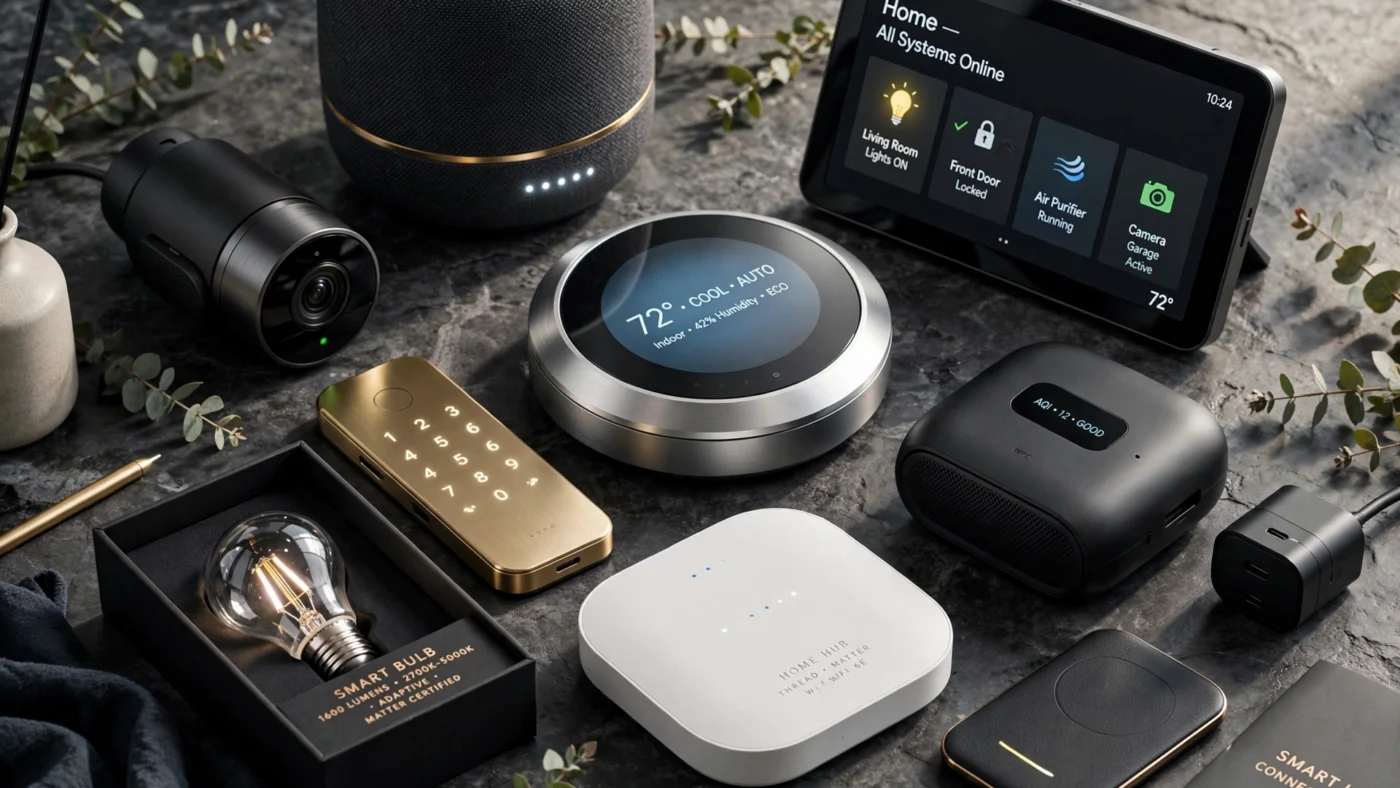
Modern connected devices have transitioned from utilitarian plastic gadgets to elegant lifestyle additions that harmonize with luxury architecture. Here are the premier smart devices that offer unmatched security and convenience. This guide shows how to choose technology that serves modern living beautifully.
Whisper-Quiet Motorized Architectural Shades
Motorized window treatments from manufacturers like Lutron Palladiom represent the gold standard of architectural automation. Featuring exposed aluminum brackets machined to jewel-like tolerances and hembar alignment accurate to within 1/8th of an inch, these shades glide up and down in absolute near-silence (<35 dBA).
Programmed to track the sun’s azimuth and altitude throughout the seasons, they automatically prevent UV damage to artwork and fine hardwoods while maximizing natural daylight harvest.
Minimalist Biometric Access Control
Say farewell to awkward digital keypads and physical key rings. Minimalist smart locks like the Level Lock+ and Lockly Vision integrate biometric fingerprint sensors directly into custom-finished mortise hardware, maintaining the classical profile of your estate entryway.
Privacy & Encryption First
Premium smart devices must utilize local processing (Apple HomeKit Secure or local Home Assistant servers) rather than sending camera feeds and private telemetry to unsecured public cloud servers.
Precision Sleep Optimization Pods
The mattress cover has entered the technology age with active biometric thermal cooling systems like the Eight Sleep Pod 4. Using hydro-cooling dual-zone temperature regulation, it dynamically adjusts mattress surface temperatures between 55°F and 110°F based on your sleep stages and heart rate variability, dramatically extending REM and deep sleep cycles.
How to Choose Premium Smart Devices for Modern Living
When selecting premium smart devices, begin with the problems you actually experience: glare damaging artwork, restless sleep, or concerns about entryway security. Match each problem to a device category, then evaluate candidates on integration, discretion, and longevity. Prefer devices that support the Matter standard or work natively with your chosen platform — HomeKit, Google Home, or a professional system like Control4 — so everything coordinates through one interface. Insist on local processing for cameras and locks, since cloud-dependent security is an oxymoron. And verify the manufacturer’s commitment by asking how many years of firmware updates are guaranteed.
Consider the full installation picture before purchasing. Motorized shades need power at every window, so plan wiring during construction or specify battery wands for retrofits. Smart locks must match your door’s bore, thickness, and finish. Sleep systems need proximity to power outlets and strong Wi-Fi. Budget for professional installation as well — these systems reward expert setup and punish DIY improvisation.
Common Mistakes When Installing Smart Home Devices
The most frequent mistake is buying devices before choosing a platform. A HomeKit lock, a Google thermostat, and an Alexa-compatible shade create three competing apps and zero coordination. Choose one ecosystem first, then purchase compatible devices exclusively within it. Second, neglecting the network. Smart homes demand robust, segmented Wi-Fi with well-positioned access points — not a single ISP-provided router hidden in a closet.
Third, ignoring household acceptance. If family members find the system confusing, they will bypass it entirely, so every automation needs an obvious manual control alongside it. Finally, underestimating power and placement. Battery-powered devices expire at inconvenient moments, so prefer wired power wherever feasible, and position hubs centrally rather than in a basement rack behind concrete walls.
Privacy and Security: Non-Negotiable Foundations
Premium smart devices earn their place only when they respect your privacy. Require local video processing, end-to-end encryption, unique credentials with no default passwords, and automatic security updates. Segment Internet-of-Things devices on a separate network VLAN so a compromised light bulb cannot reach your computers or storage. Choose brands that publish security whitepapers and respond promptly to vulnerability reports. Convenience should never cost confidentiality — the finest systems protect both.
Document your security posture as well. Keep a simple record of device models, firmware versions, and network credentials in a password manager. This inventory proves invaluable when troubleshooting, filing insurance claims, or handing the home to a new owner.
Frequently Asked Questions About Premium Smart Devices
Do premium smart devices work without internet?
The best ones do, for all core functions. Look for local control via Matter, Thread, or Z-Wave: shades, locks, and lighting should operate normally during outages. Cloud-dependent features such as remote access and voice assistants will pause, but your home itself should never stop working.
How much do premium smart devices cost?
Expect $500 to $1,500 per motorized shade, $300 to $600 for premium smart locks, and $2,000 to $2,500 for active sleep systems. Whole-home deployments with proper networking and professional installation typically run $15,000 to $50,000 depending on the property’s size.
Are they difficult to maintain?
Maintenance is minimal: replace batteries annually, allow automatic firmware updates, and clean sensors periodically. Choose systems with self-diagnostics and dealer support so potential issues are identified before they affect daily life.
Can I mix different brands?
Yes, provided they share a common standard. Matter-certified devices interoperate across brands within your chosen platform. Avoid proprietary ecosystems that lock you to a single manufacturer and limit future choices.
For the broader context of connected technology, see the Internet of things article on Wikipedia.
Conclusion
When selected with discernment, premium smart devices do not distract—they provide subtle comfort, seamless security, and elevated everyday convenience.