Elements That Make a Home Feel Professionally Designed
Examine the subtle nuances—from ceiling details to custom upholstery weights—that separate amateur decorating from professional interior design.
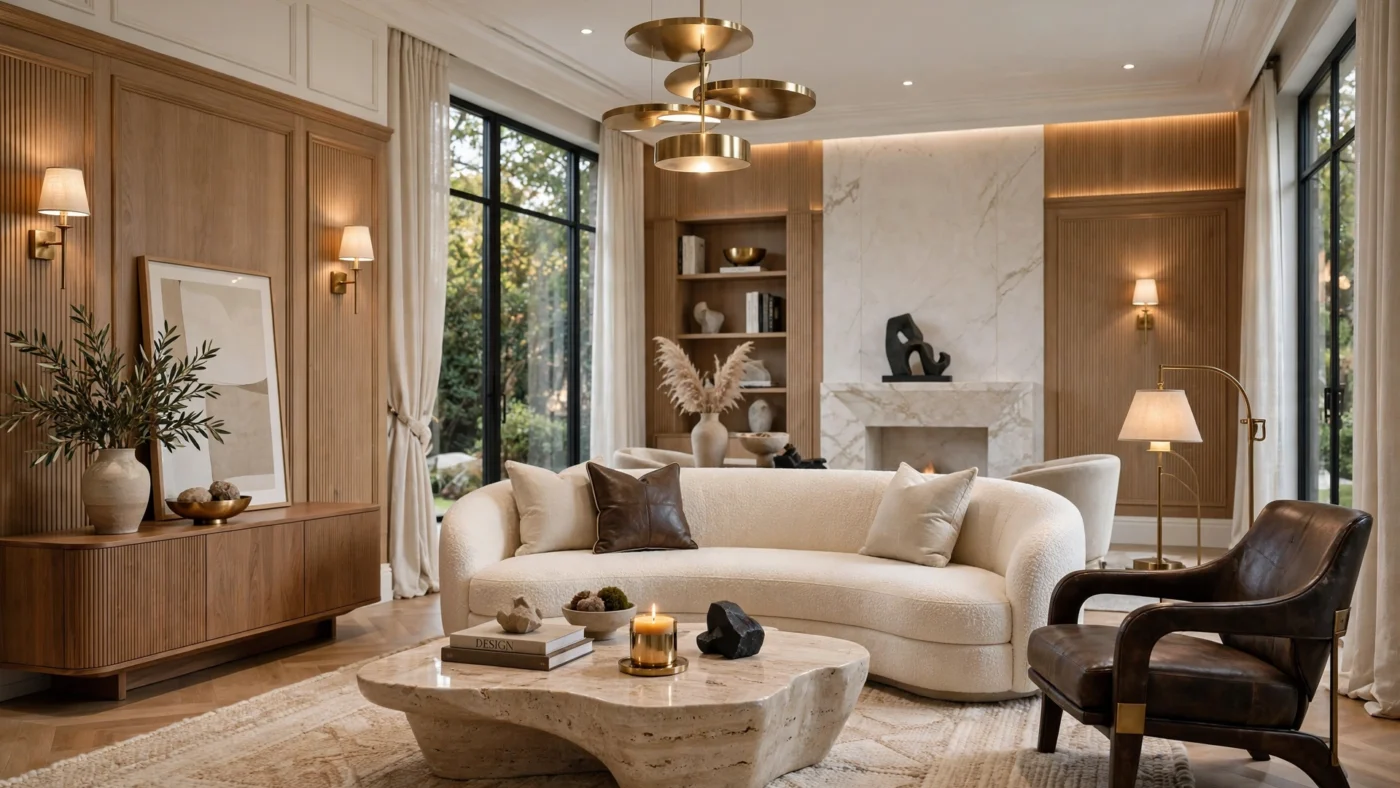
We have all stepped into residences that immediately feel polished, balanced, and complete, even if we cannot immediately identify why. That distinctive quality is the hallmark of professional interior design. Here are the telltale elements that distinguish a professionally curated home.
What makes one interior look professionally designed while another merely looks decorated? The difference rarely comes down to budget. It comes down to a handful of deliberate decisions — about scale, light, concealment, and craft — that professionals apply as second nature. Below, we expand on those decisions with practical ways to make your own rooms feel professionally designed.
Disciplined Scale and Varying Elevations
Amateurs often furnish rooms where everything rests at the exact same horizontal height. Professional designers deliberately orchestrate a rhythmic skyline: a tall floor-to-ceiling armoire balanced by a low daybed, a towering arched floor lamp, and mid-height artwork. This vertical diversity draws the eye dynamically across the room.
Full-Scale Bespoke Window Architecture
Professionals never buy off-the-rack curtains. They install custom motorized ripple-fold draperies hung directly from ceiling pockets, completely concealing the curtain rod hardware. The fabric drops to kiss the floor with millimeter precision, imparting tailored grandeur.
The Hidden Secret: Layered Rug Padding
Underneath every fine wool rug, professional designers specify 1/2-inch dense felt and rubber acoustic pads. The luxurious foot-feel underfoot immediately communicates quality to anyone who walks across the room.
Concealed Outlets and Integrated Cable Routing
In a professionally designed home, you will never see a lamp cord dangling along a baseboard. Outlets are recessed into baseboards, paint-matched, or hidden inside floor receptacles underneath furniture.
Custom Joinery: The Signature of a Professionally Designed Interior
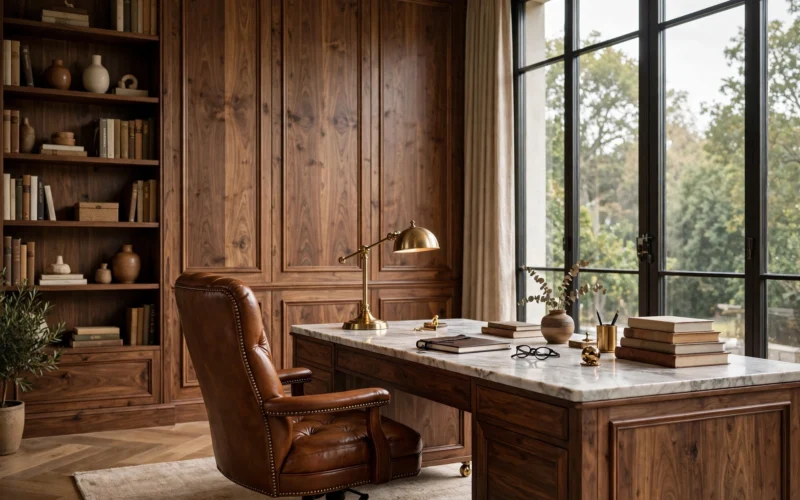
Nothing says professionally designed like millwork made for the room. Bespoke bookshelves that run wall to wall, a window seat fitted exactly into a bay, wardrobe interiors configured around your actual clothes — these fitted elements make a home feel considered in a way freestanding furniture never can. If full custom joinery is beyond budget, semi-custom upgrades deliver much of the same effect: replace builder-grade doors with solid-core ones, add picture-frame molding to flat walls, and upgrade skirting boards to a taller, more architectural profile.
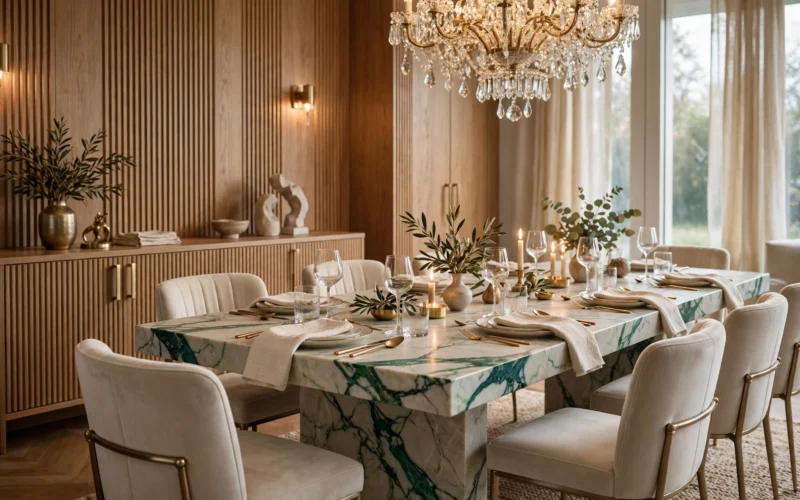
Even one built-in moment — a reading nook with integrated shelving, a bar cabinet framed in fluted timber — can elevate an entire floor. Professionals think architecturally first and decoratively second, and that order of operations shows in the finished result.
The Lighting Plan Professionals Swear By
In a professionally designed home, lighting is planned on paper before a single fixture is purchased. Each room receives ambient, task, and accent layers on separate circuits — all dimmable, all at a consistent warm color temperature. Wall sconces flank mirrors, picture lights graze artwork, and concealed LED strips wash joinery in a soft glow. The result is a home that glows rather than glares, and a room that feels finished even before the furniture arrives.
Avoid the single-overhead-fixture trap at all costs. For the principles behind professional lighting craft, see the overview of lighting design on Wikipedia.
Material Continuity: One Palette, Every Room
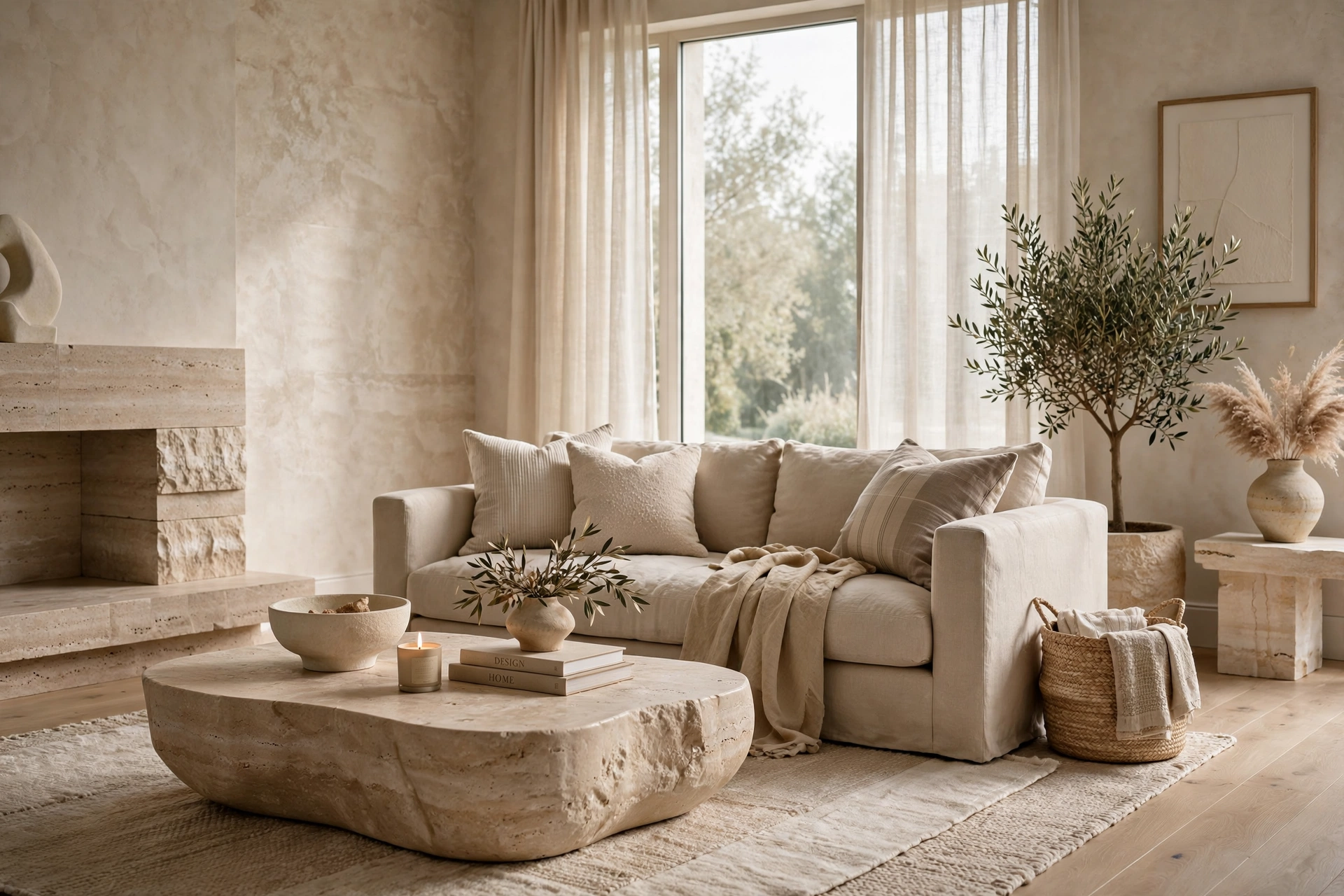
Professionals repeat a tight palette of materials throughout the entire house: the same oak underfoot, the same brass on every handle, the same stone at the fireplace and the vanity. This repetition is what makes separate rooms feel like chapters of one story — the unmistakable signature of a professionally designed home. Limit yourself to five core materials and carry them everywhere; discipline here reads as luxury.
Common Mistakes That Betray an Amateur Hand
- Flat, one-height rooms. When every surface sits at the same level, the eye gets bored. Vary elevations deliberately to build the rhythmic skyline of a professionally designed interior.
- Visible cords and clutter. Nothing shatters the illusion faster than a tangle of cables. Route, recess, and conceal as described above.
- Undersized art. A postage-stamp painting floating on a vast wall looks apologetic. Go bigger than feels comfortable, or group smaller pieces into a considered gallery wall.
- Neglecting the ceiling. The fifth wall deserves attention: a soft plaster tint, elegant coffers, or even a well-chosen pendant transforms the volume of a room.
- Buying everything at once. Rooms assembled in a single shopping trip look like showrooms. Live with the space, then layer in vintage and collected pieces over time.
Frequently Asked Questions
How can I make my home look professionally designed on a budget?
Focus on the invisible upgrades: paint everything one cohesive palette, install dimmers, conceal cords, and hang curtains high and wide. These low-cost moves deliver a professionally designed feel far more effectively than a single expensive furniture purchase.
What is the single biggest giveaway of amateur design?
Lighting — specifically, relying on one bright overhead fixture per room. Layered, dimmable, warm lighting is the fastest way to close the gap between amateur and professional results.
Should every room match?
Rooms should relate, not match. Repeat materials, metals, and a core color thread throughout the house so each space feels like part of a professionally designed whole, while letting individual rooms have their own mood.
Do I need an interior designer to achieve this look?
Not necessarily. The principles in this guide — scale variation, bespoke-feeling details, concealed infrastructure, and material discipline — are exactly what professionals charge for. Apply them patiently and the results will speak for themselves.
Conclusion
Professional design is defined by an obsessive attention to the invisible details. When scale, drapery, and electrical integration are executed with precision, your interior achieves effortless harmony.