Luxury Lighting Ideas That Transform Interior Spaces
Explore the sophisticated lighting techniques used by high-end architects—from concealed plaster coves to bespoke alabaster pendants—to craft sublime interior moods.
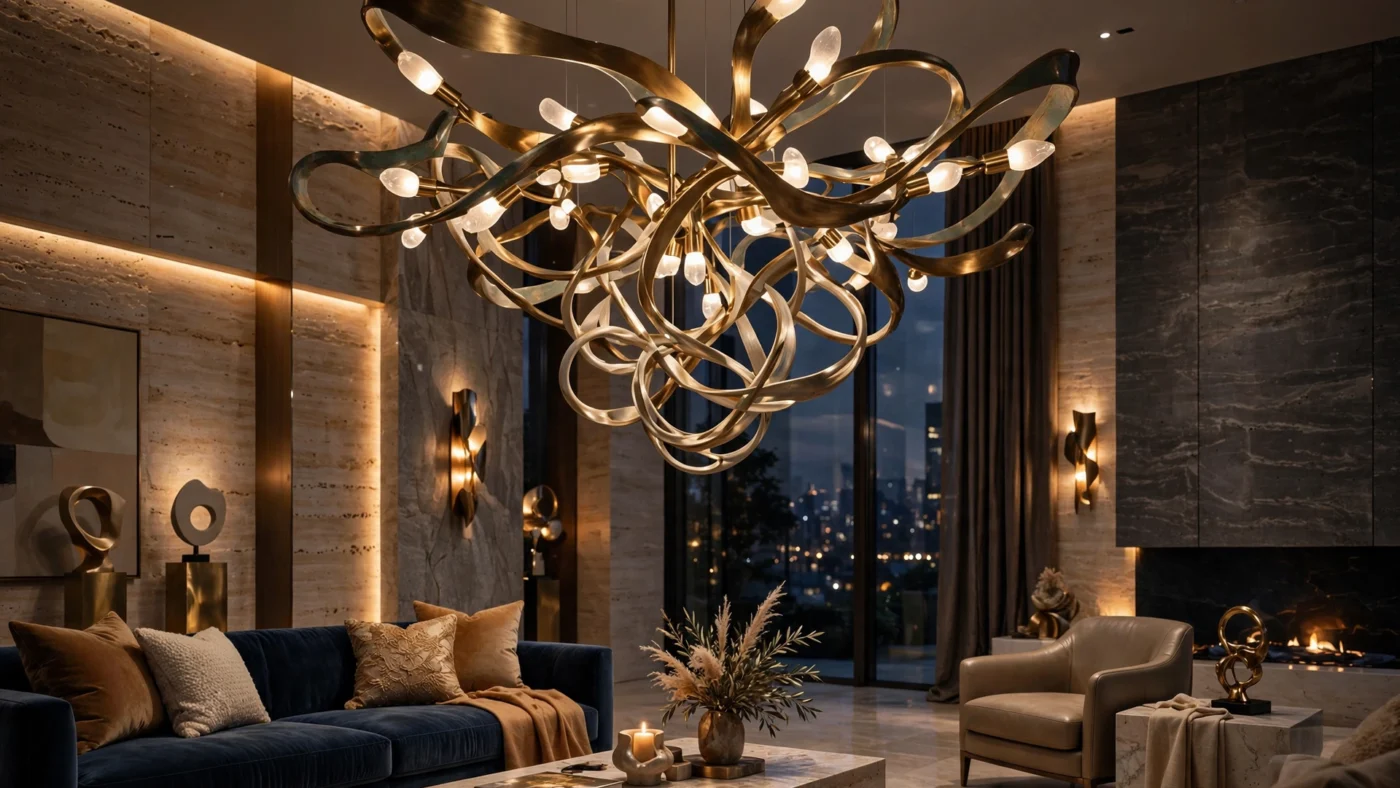
The right luxury lighting ideas can transform even a modest interior into something extraordinary. Light shapes mood, sculpts architecture, and makes every material look its best — yet it remains the most under-planned element in most homes. This guide moves beyond basic fixtures into the layered, architectural approach designers use to make residences truly glow.
Light is the invisible architect of luxury. It possesses the transformative capacity to expand volume, sculpt wall planes, and create an atmosphere of profound serenity. In world-class residences, illumination is never an afterthought; it is integrated into the core architectural concept.
The Magic of Alabaster and Translucent Quartz
While clear glass pendants can produce point-source glare, natural Spanish alabaster and carved white quartz naturally diffuse illumination into a celestial, milky glow. An oversized carved alabaster disk pendant suspended over a monolithic dining table functions as a dramatic geological mobile by day, and radiates warm, ethereal light by night.
Because each cut of natural stone contains unique veining, no two fixtures cast precisely the same luminosity, imbuing your living areas with bespoke individuality.
Concealed Architectural Cove and Baseboard Lighting
The highest achievement in modern residential lighting is illumination where the source remains entirely invisible. By crafting recessed ceiling coves, floating step reveals, and hidden baseboard channels equipped with museum-grade 24V LED tapelights (95+ Color Rendering Index), rooms seem to defy gravity.
- Ceiling Flotation: Grazing ceiling planes with indirect illumination visually lifts the room, creating an airy, cathedral-like atmosphere.
- Vertical Wall Grazing: Recessing low-glare downlights just two inches off a hand-troweled Venetian plaster wall accentuates artisan textural variations.
Technical Standard: Color Temperature Consistency
Maintain an uncompromising 2700K color temperature for living spaces and bedrooms. Warm dimming drivers (transitioning from 2700K down to 1800K candle glow as light levels lower) replicate the soothing biological cues of evening sunset.
Sculptural Floor Lamps as Living Art
In addition to architectural recessed systems, freestanding statement floor lamps introduce vertical punctuation. Consider blackened bronze forged tree-branch fixtures or mid-century Italian brass arches with spun-aluminum shades. These pieces function as freestanding sculpture during daylight hours while providing critical reading pools of light after dusk.
Conclusion
When lighting is orchestrated with nuance, a residence feels hospitable, restful, and undeniably magnificent. Treat every light source as an artistic stroke, painting shadows and luminescence across your interior canvas.
The Three Layers Every Room Needs
Professional lighting design always works in three layers. Ambient light provides the general glow — ceiling fixtures, cove lighting, well-placed floor lamps. Task light serves reading, cooking, and working — focused and positioned where you need it. Accent light is the drama: picture lights, spots grazing stone, LED strips under floating shelves. Most homes have only the first layer; adding all three is the single biggest leap of all luxury lighting ideas.
Put every layer on its own dimmer. The ability to shift from bright and functional by day to low and golden by night is what makes a home feel alive — and it costs little more than the dimmers themselves.
Luxury Lighting Ideas for Every Room
Tailor these luxury lighting ideas to each space. Entries deserve a moment of drama — a pendant or chandelier scaled to the volume, on a dimmer, greeting every arrival. Living rooms need at least five sources mixing floor lamps, table lamps, and art lighting. Kitchens require bright, shadow-free task light over work surfaces plus warm pendants over the island.
Bedrooms should be the softest rooms in the house: reading sconces with individual switches, low ambient light, no overhead glare. Bathrooms need flattering, high-CRI light at the mirror — look for a high color rendering index (95+) so skin tones read naturally — plus a dimmable layer for evening soaks.
Statement Fixtures: Jewelry for Your Rooms
Among all luxury lighting ideas, one spectacular fixture delivers the most visible impact per dollar. Scale it boldly: chandeliers should span roughly half to two-thirds the width of the table beneath. Hang dining fixtures 30–34 inches above the tabletop so they light faces, not foreheads. Getting scale right is the difference between lighting that decorates and luxury lighting ideas that transform.
Mix fixture eras and materials for a collected feel — an antique brass chandelier over a contemporary table, or modern alabaster pendants in a traditional kitchen. The contrast reads as confidence, and vintage or artisan-made pieces bring one-of-a-kind character mass-market fixtures lack.
Smart Controls and Dimming: The Invisible Luxury
The most effortless luxury lighting ideas are the ones you never touch. Programmed scenes — “Morning” bright and cool, “Evening” warm and low, “Entertaining” glowing — transform a home’s mood at a tap. Warm-dimming LEDs that shift from 2700K toward candlelight tones as they dim replicate sunset’s biological cues.
Start simple: dimmers on every circuit, then scene control in the rooms you live in most. Even without full automation, dimming everything after sunset will make your home feel dramatically more luxurious — proof that the best luxury lighting ideas are often the simplest.
Luxury Lighting Ideas: Frequently Asked Questions
What color temperature should I choose?
2700K for living spaces and bedrooms — warm and flattering. Kitchens and baths can go to 3000K for clarity, but never above; cooler light feels institutional and makes luxury materials look cheap.
How many light sources does a living room need?
At least five, across all three layers: ambient, task, and accent. Count them tonight — most rooms have one or two, which is why they feel flat after dark.
Are LED strips really luxury?
Concealed, high-CRI LED strips are among designers’ favorite luxury lighting ideas — invisible by day, they make ceilings float and shelves glow by night. The key is concealment: you should see the effect, never the source.
What is the biggest lighting mistake?
A single bright overhead with no dimmer. It flattens faces, kills texture, and makes even beautiful rooms feel like offices. Layer and dim — always.