Designer-Inspired Decor Ideas for Modern Homes
Incorporate high-fashion runway sensibilities, architectural rigor, and couture upholstery techniques into your private living spaces.
If you have ever toured a designer showhouse and wished you could bottle its effortless polish, these designer-inspired decor ideas will show you how. True designer style has little to do with budget and everything to do with intention: editing with discipline, layering rich materials, and obsessing over the small details most people never notice. The strategies below are the same ones top interior designers use to make modern homes feel bespoke, collected, and quietly luxurious.
High-fashion couture and premier interior design share an intimate creative lineage. The same principles that govern Parisian ateliers—proportion, exquisite textiles, unexpected contrast, and handcrafted tailoring—can be translated directly into the contemporary luxury home.
Couture Millwork and Hidden Architectural Paneling
Modern luxury residences often eliminate visual clutter by concealing storage behind floor-to-ceiling vertical paneling. Using quarter-sawn European oak or smoked eucalyptus with integrated touch-latches allows doors, closets, and entertainment systems to disappear completely into the architectural shell.
This seamless envelope creates a tranquil gallery backdrop against which sculptural furniture and contemporary art take center stage.
The Curated Gallery Wall Reimagined
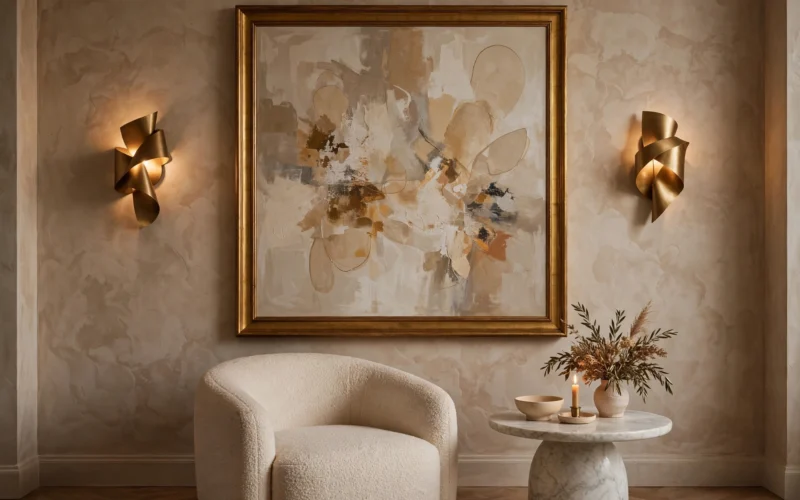
Instead of crowded, mismatched picture clusters, modern designer homes favor monumental scale or disciplined museum framing. Consider two large-format framed abstract works hung with generous breathing room, or a disciplined grid of black-and-white architectural photography framed in identical deep-set white oak shadowboxes with anti-reflective museum glass.
Styling Insight: Asymmetric Balance
Depart from rigid symmetry. Instead of matching flanking nightstands or identical table lamps, pair a slender vertical pendant on one side with a sculptural, low ceramic table lamp on the other to create dynamic visual energy.
Bespoke Pedestals and Sculptural Displays
Take inspiration from premier art fairs and luxury flagship boutiques by incorporating freestanding plinths. A solid block of travertine, honed Nero Marquina marble, or blackened steel placed in an unused corner elevates a single ceramic vessel or bronzed maquette to fine art status.
Conclusion
Infusing designer-level sophistication into your home is not about replicating catalog showrooms. It is about applying architectural discipline, honoring artisan crafts, and cultivating an environment that tells your distinctive personal story.
Couture Textiles and Tailored Upholstery
Designers choose fabrics the way tailors choose suiting: by hand-feel, drape, and durability. Build your scheme around two or three tactile textiles — a nubby bouclé, a deep-pile velvet, a crisp Belgian linen — and repeat them across the room so the palette feels deliberate. Insist on tailored details: double-welt cord trim, pattern-matched cushion seams, and bench-made frames. These quiet markers of quality separate designer pieces from mass-market lookalikes and reward daily use for decades. If you are collecting designer-inspired decor ideas for a fabric scheme, order oversized swatches and live with them for a week — showroom lighting flatters everything, but your living room never lies.
Window treatments deserve the same couture thinking. Mount drapery hardware close to the ceiling and let full-length linen panels just kiss the floor. Interlining adds body and insulation, while a simple ripple-fold heading reads far more modern than gathered pleats. When fabric, fullness, and hem are right, even a modest window looks architecturally considered.
Designer-Inspired Decor Ideas for Layered Lighting
Nothing exposes an amateur scheme faster than a single overhead light at full brightness. Designers build every room in three layers: ambient light for general glow, task light for reading, and accent light to wash art and architecture. Aim for at least five light sources in a living room and put every one on a dimmer. The ability to lower the mood after sunset is the most transformative of all designer-inspired decor ideas.
Choose warm 2700K bulbs throughout living spaces for a candlelit feel, reserving cooler temperatures for kitchens and baths. Picture lights over art, brass reading sconces, and LED strips concealed above bookcases add the layered glow that makes rooms feel expensive after dark — it remains one of the most repeated designer-inspired decor ideas in professional portfolios. Linen or parchment shades soften light and hide the bulb — always the goal.
Material Pairings Designers Swear By
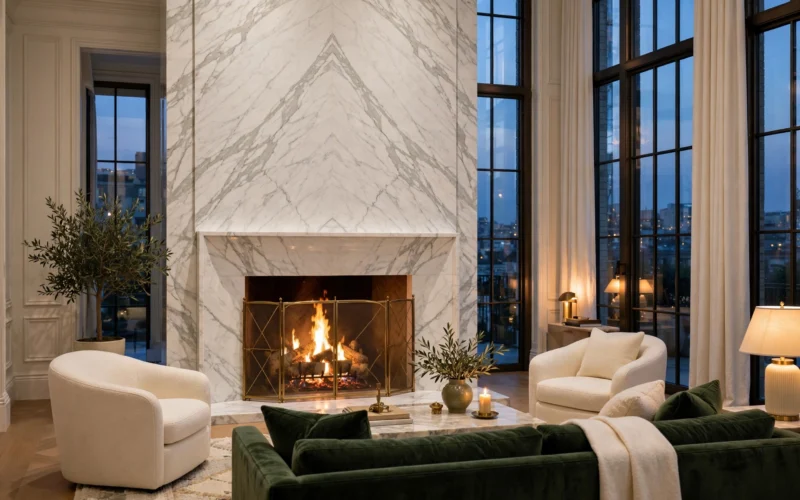
Designer rooms gain depth from contrast, not single star materials. Memorize a few fail-safe pairings: warm travertine against blackened steel, smoked oak beside honed Carrara marble, ribbed glass next to aged bronze, creamy plaster behind dark walnut millwork. Each balances warm and cool, rough and smooth, matte and reflective — the tension that keeps neutrals from feeling flat. Browsing the geology of travertine is surprisingly useful for designer-inspired decor ideas: once you understand how the stone forms, you start specifying it with the confidence of a professional.
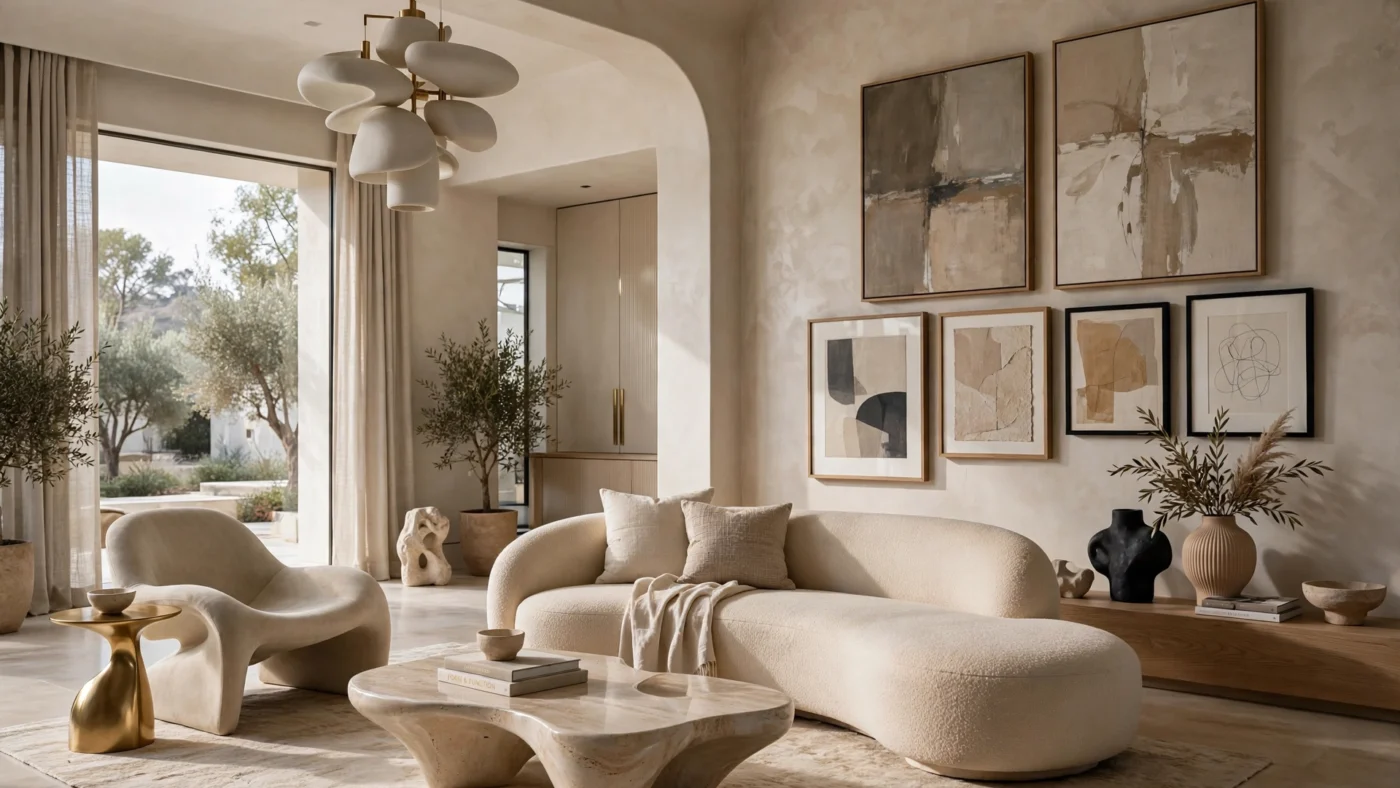
Apply the logic at every scale: a travertine coffee table grounds a soft bouclé sofa; bronze hardware elevates flat-front oak cabinetry. Limit yourself to three or four primary materials per room and repeat each at least twice so the scheme feels woven together. When in doubt, natural stone, honest timber, and hand-finished metal never steer you wrong.
The Art of the Edit: Styling Surfaces Like a Professional
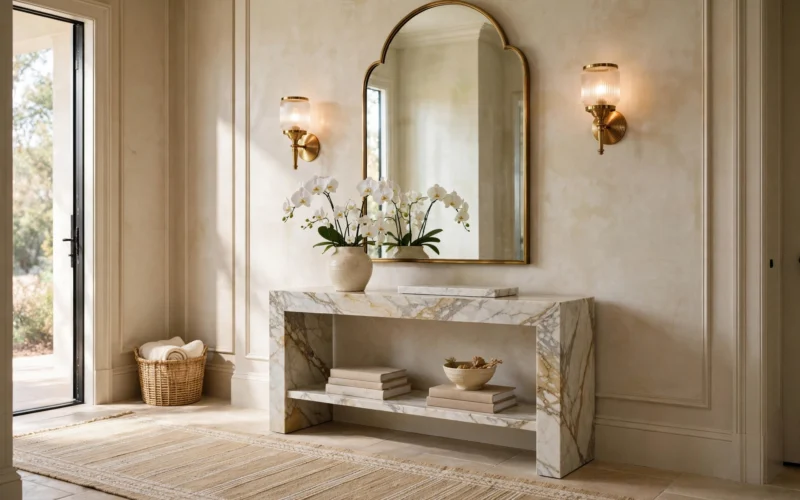
Start by clearing the surface completely, then rebuild in groupings of three or five, varying heights so the eye travels. Anchor each vignette with something tall (a sculptural vase), something horizontal (a stack of art books), and something personal (a stone box or vintage find). Trays are a secret weapon: they corral candles and small objects into one intentional composition instead of scattered clutter.
Equally important is what you leave out. Negative space is a luxury material — an empty stretch of shelf lets remaining pieces breathe and signals confidence. Rotate accessories seasonally rather than displaying everything at once. Give every object a reason to be there: beauty, function, or story. If it serves none of the three, it does not earn the shelf. Restraint is the quietest of all designer-inspired decor ideas, and it costs nothing.
Common Mistakes That Undermine Designer-Inspired Decor Ideas
The fastest tell of a non-designer room is the matching furniture set — identical sofa, loveseat, and chair reads as showroom, not home. Mix silhouettes while holding the palette constant for a collected feel. The second classic error is the too-small rug: in living rooms, at least the front legs of every seat should rest on it.
Lighting missteps run a close third — recessed downlights alone create harsh, flat light. Finally, resist filling every wall and corner. One strong piece of art beats five mediocre ones, and a room that is 90 percent finished almost always looks more expensive than one that is overdecorated.
Designer-Inspired Decor Ideas: Frequently Asked Questions
Which designer-inspired decor ideas work on a realistic budget?
Spend where the hand touches and the eye rests: upholstery, lighting, drapery, and paint. Among all designer-inspired decor ideas, fresh paint and layered lighting deliver the biggest return per dollar. Save on accessories and side tables by hunting vintage and supporting emerging artists. A room with a well-made sofa, beautiful lighting, and tailored curtains reads as designer even with flea-market side tables.
What is the single fastest upgrade for a modern home?
Replace builder-grade lighting and add dimmers everywhere — it transforms a home’s mood in a weekend. Second place goes to ceiling-mounted drapery in natural fabric, which adds height, softness, and architectural presence to any room.
Should every room follow the same style?
Not identically, but rooms should share a design language. Repeat two or three materials, one metal finish, and a consistent neutral undertone throughout. This quiet continuity makes a home feel designed rather than decorated one room at a time.
How do designers choose art for modern interiors?
They buy what they love and frame it impeccably — framing often matters more than the art itself. Large scale beats small clusters, consistent framing unifies mixed pieces, and museum glass keeps focus on the work. Art hung in splendid isolation always looks more valuable.