Luxury Home Wall Decor Ideas That Feel Truly Curated
Walk into any genuinely luxurious home and notice what pulls your eye first. It’s rarely the sofa. It’s almost always the walls — a sweeping canvas above the fireplace, a sculptural relief catching the light in the hallway, a quiet gallery wall that feels collected over years rather than bought in a single afternoon. Walls are the largest surface in any room, and how you dress them decides whether a space feels expensive or merely furnished.
Here’s the good news: luxury home wall decor has very little to do with budget and almost everything to do with intention. A single well-chosen, well-lit, properly scaled piece will always outclass a wall crowded with expensive-but-random frames. This guide walks through the ideas, materials, and design principles that make walls feel curated — plus room-by-room guidance and the mistakes that undo even beautiful pieces.
The Principles Behind Truly Luxurious Walls
Before buying anything, it helps to understand what the eye actually reads as “luxury.” It’s not price tags. It’s these three things.
Scale before style
Small, lonely frames floating on a large expanse of wall are the most common reason decor feels cheap. Luxury is about proportion: the art should relate to the wall and the furniture beneath it. As a rule of thumb, artwork hung above a sofa or console should span roughly two-thirds the width of the furniture below it. One confident oversized piece beats six timid little frames every time.
Restraint is a luxury in itself
Expensive rooms breathe. Give each wall one clear hero — a statement piece, a considered arrangement, or a beautiful material treatment — and let the rest of the room support it. When every surface competes for attention, nothing feels important. The calm, uncluttered walls you see in high-end interiors are a deliberate choice, not an accident.
Materials do the talking
Print quality, frame finish, and surface texture are what separate “nice” from “luxurious” up close. A gallery-quality print in a solid wood or metal frame reads completely differently from the same image in a plastic frame. This is also why materials themselves can become the decor — natural stone, limewash plaster, fluted wood, and woven textiles add richness no flat print can match.
Statement Art That Anchors the Room
One oversized piece, hung with confidence
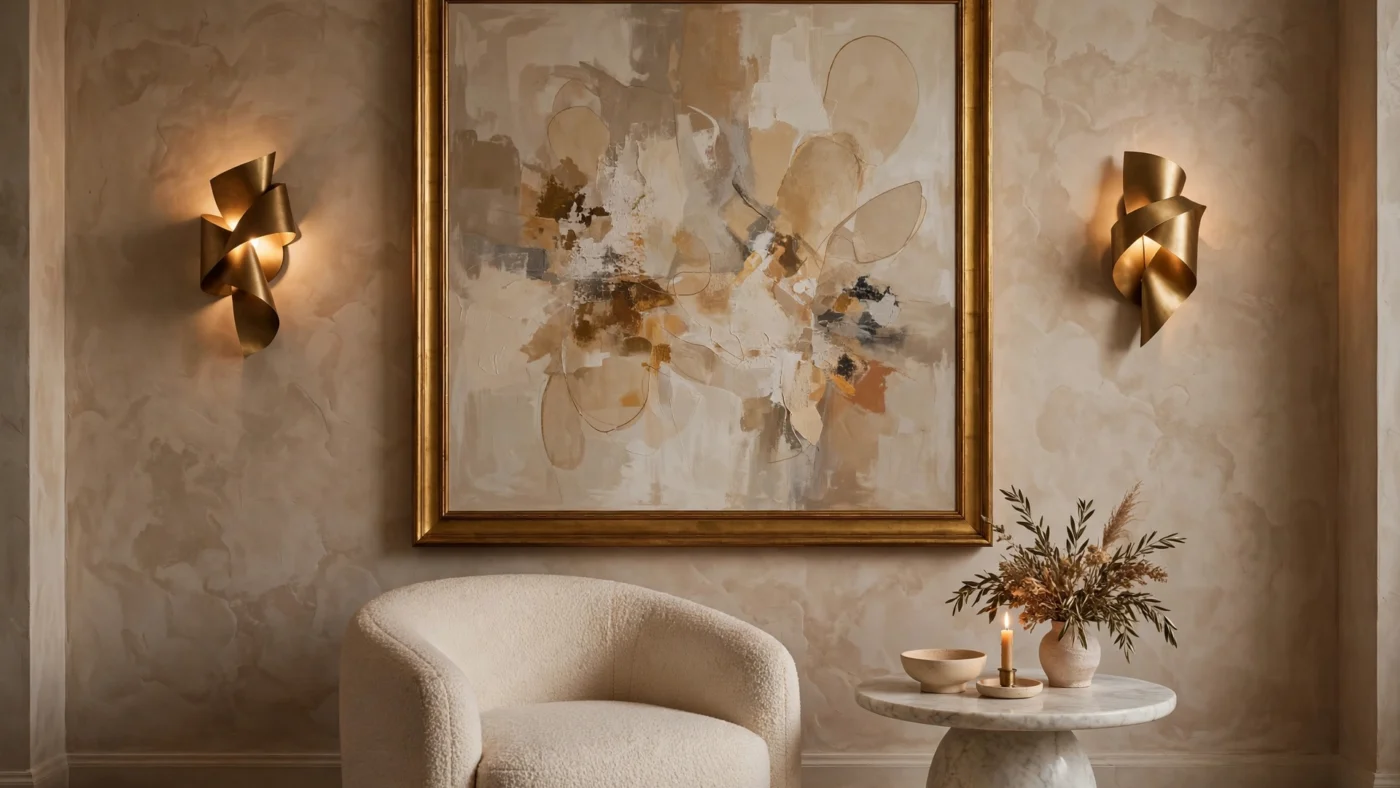
If your room has a single dominant wall — above the sofa, over the fireplace, behind the bed — consider giving it one large artwork instead of an arrangement. Abstract pieces with layered texture, serene landscapes, or bold black-and-white photography all work beautifully at scale. The key is commitment: hang it centered, at eye level (the center of the piece roughly at standing eye height), and let it own the wall. A piece this size sets the tone for the entire room, so choose something you genuinely love — you’ll live with it for years.
Curated gallery walls
Gallery walls get a bad reputation from the formulaic versions you see in catalogs, but a truly curated one remains one of the most personal forms of luxury wall decor. The trick is to collect slowly and mix deliberately: framed art alongside photography, a small mirror, a textile, maybe an antique find from your travels. Anchor the arrangement with one or two larger pieces, then build around them. Interestingly, this layered, floor-to-ceiling style of hanging has real history behind it — gallery walls trace back to the 1670s salon exhibitions of France’s Académie des Beaux-Arts, where paintings were hung tightly from floor to ceiling, as Homes & Gardens notes in their piece on the history of gallery walls. Knowing that lineage changes how you see the format: it’s a collecting tradition, not a trend.
Practical tips that actually matter: lay the arrangement out on the floor first, keep two to three inches between frames, and repeat one unifying element — a frame color, a mat style, or a tonal palette — so the mix feels intentional rather than accidental.
Sculptural relief and dimensional pieces
Flat art is only one option. Dimensional wall pieces — carved wood panels, plaster reliefs, metal sculptures, woven wall hangings — add a layer of shadow and depth that changes with the light throughout the day. In a luxury interior, this kind of piece often does double duty: it’s art in the morning and a play of light and shadow by evening. Textile wall hangings in wool or silk deserve special mention; they soften acoustics in hard-surfaced rooms while adding warmth that framed prints can’t provide.
Materials That Instantly Read as High-End
Sometimes the most luxurious wall decor isn’t something you hang at all — it’s the wall itself. These material treatments elevate a room before a single frame goes up:
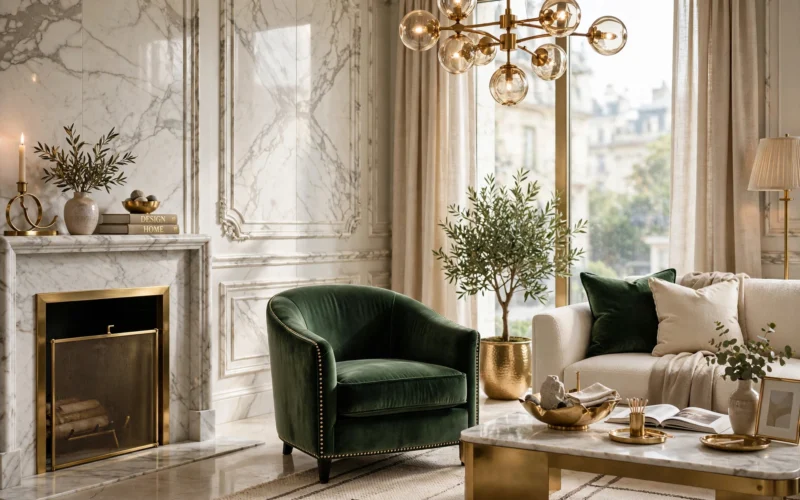
- Natural stone and marble slabs. Book-matched stone behind a fireplace or in a bathroom creates a jaw-dropping focal point. The veining is nature’s artwork, and no two installations are alike.
- Limewash and polished plaster. These old-world finishes add soft movement and depth to flat walls. They pair beautifully with both modern and traditional furniture and photograph wonderfully in natural light.
- Fluted wood paneling. Vertical slat panels in walnut or oak add rhythm and architectural interest. Use on a single accent wall or full-height in an entryway for maximum effect.
- Hand-painted wallpaper and murals. Not the repeating patterns of mass-market wallpaper — think large-scale botanical scenes, misty landscapes, or abstract washes that read as original art. A single mural wall can define an entire room.
- Brass, bronze, and aged metal accents. Metal wall sculptures or inlay details in warm metallics catch light and add a jewelry-like finish to a room.
- Woven textiles and leather panels. Upholstered or leather-clad wall sections in a study or bedroom add acoustic softness and a tailored, club-like richness.
The Interplay of Light and Wall Decor
Here’s something most wall decor advice skips entirely: a beautiful piece in bad light is an invisible piece. Lighting is what turns decor into an experience, and it’s where luxury interiors quietly win.
- Picture lights mounted above key artworks create a gallery feel and draw the eye exactly where you want it. Choose warm-toned bulbs that flatter both art and skin tones.
- Wall sconces flanking a central piece frame it like architecture, adding symmetry and a soft glow that makes evenings feel cinematic.
- Grazing light — fixtures placed close to the wall that wash light down across textured surfaces — makes stone, plaster, and fluted panels come alive. This technique is borrowed from museums and galleries, and it transforms dimensional materials completely.
- Dimmers on everything. The ability to lower the light in the evening is the difference between a room that looks good and a room that feels good. If you do one lighting upgrade, make it this one.
For a deeper dive into layering light through a whole home, see our guide to luxury lighting ideas.
Room-by-Room Guidance
Living room
This is the room guests judge, so it’s where your strongest piece belongs. One oversized artwork or a considered gallery wall above the sofa anchors the space. If you have a fireplace, the wall above it is prime real estate — keep it to a single statement rather than a cluster. Explore more ideas in our modern luxury living room guide.
Bedroom
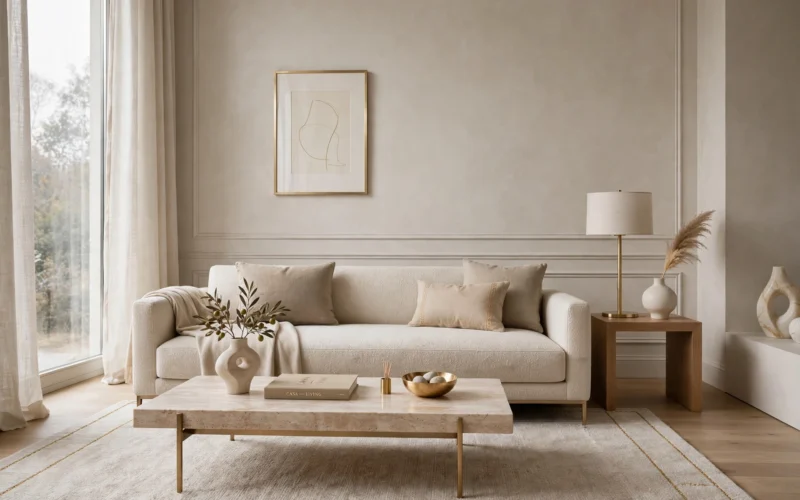
Walls here should calm, not energize. Soft abstract art, serene photography, or a large textile hanging above the bed works beautifully. Keep the palette restrained and the framing simple — bedroom luxury is about quiet, not drama.
Dining room
Dining rooms can handle more drama because they’re used in the evening under artificial light. Moody landscapes, rich botanical prints, or a dramatic mirror that doubles the candlelight all shine here. If the room has a sideboard, one horizontal piece above it, lit by a picture light, is a classic move that never fails.
Entryway and hallways
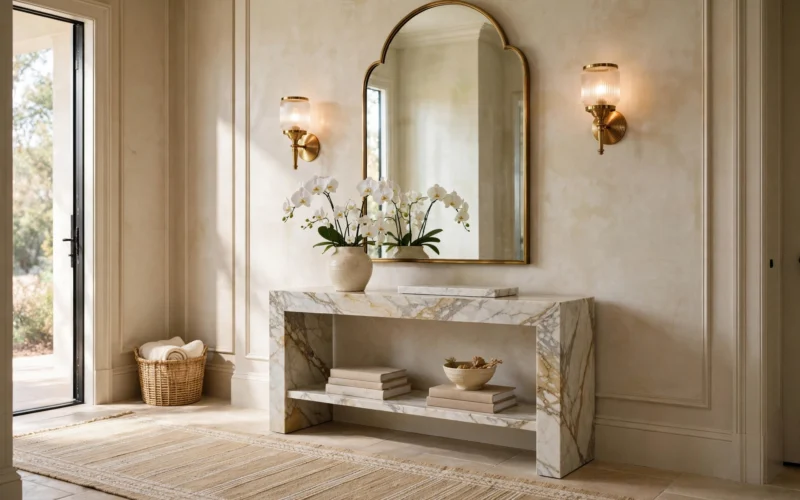
These transitional spaces are where sculptural and dimensional pieces earn their keep — a carved panel, a striking mirror, or a series of small works in a row down a long hallway. Hallways are also perfect for a linear gallery: a row of matching frames at consistent spacing turns a forgotten corridor into a destination.
Five Mistakes That Make Expensive Decor Look Cheap
- Hanging art too high. The single most common error. Art should sit at eye level — the center of the piece roughly at 57 to 60 inches from the floor in most rooms. Pieces hung near the ceiling look disconnected from the furniture and the viewer.
- Scattering small frames across a big wall. Tiny art on a large wall reads as an afterthought. Group small pieces into one tight arrangement or replace them with something properly scaled.
- Ignoring the furniture relationship. Art floating six inches above a sofa’s shadow line with a huge gap beneath it looks adrift. Keep the bottom of the frame six to eight inches above the furniture.
- Forgetting lighting. Even museum-quality art falls flat in a dim corner with no accent light. If you can’t add picture lights, at least position key pieces where they catch natural light during the day.
- Buying the whole wall in one afternoon. The curated look takes time. Live with one great piece before adding the next. Walls that evolve slowly always look more authentic — and more luxurious — than rooms decorated in a single shopping trip.
Frequently Asked Questions
How big should wall art be above a sofa?
Aim for the artwork (or the full arrangement) to span about two-thirds the width of the sofa. If your sofa is 84 inches wide, look for art around 55 inches wide. A single large piece or a tight grouping both work — what matters is that the art feels proportional to the furniture beneath it, not lost on the wall.
Can luxury wall decor work in a small apartment?
Absolutely — arguably it’s even more impactful in small spaces. One oversized piece makes a small room feel intentional and grand, while mirrors and light-colored art visually expand tight walls. The key is editing: choose fewer, better pieces and give each one room to breathe.
What’s the best way to plan a gallery wall?
Lay all your pieces on the floor and experiment with arrangements before touching a nail. Start with your largest piece as the anchor, usually slightly off-center or at eye level, then build outward. Keep two to three inches between frames, and repeat one element — frame color, mat tone, or subject matter — for cohesion. Trace the final layout on kraft paper and tape the templates to the wall to preview it.
How should I light wall art properly?
Dedicated accent lighting makes the biggest difference. Picture lights above individual pieces, adjustable spotlights on tracks, or wall washers for textured surfaces all work. Use warm-white bulbs (around 2700K) for a flattering glow, and put accent lights on dimmers so you can set the mood in the evening. Avoid placing art where direct sunlight hits it for hours, as UV fades prints and photographs over time.
Is wallpaper still considered luxury in 2026?
Yes — but the definition has evolved. Mass-patterned wallpaper reads as dated; what’s current is large-scale mural wallpaper: hand-painted-look botanicals, atmospheric landscapes, and abstract washes that function as art installations. Used on a single accent wall with simple framing elsewhere, a mural wall is one of the strongest luxury statements you can make.
The Takeaway
Luxury home wall decor isn’t a shopping list — it’s a way of seeing your walls. Start with scale, choose materials that reward a closer look, light everything with intention, and let the collection grow over time. Do that, and your walls will do what the best interiors always do: make people feel something before they’ve even noticed the furniture.