How to Create a Designer-Inspired Living Space
Learn the holistic design methodologies professional architects use to establish balance, flow, and refined living in contemporary residences.
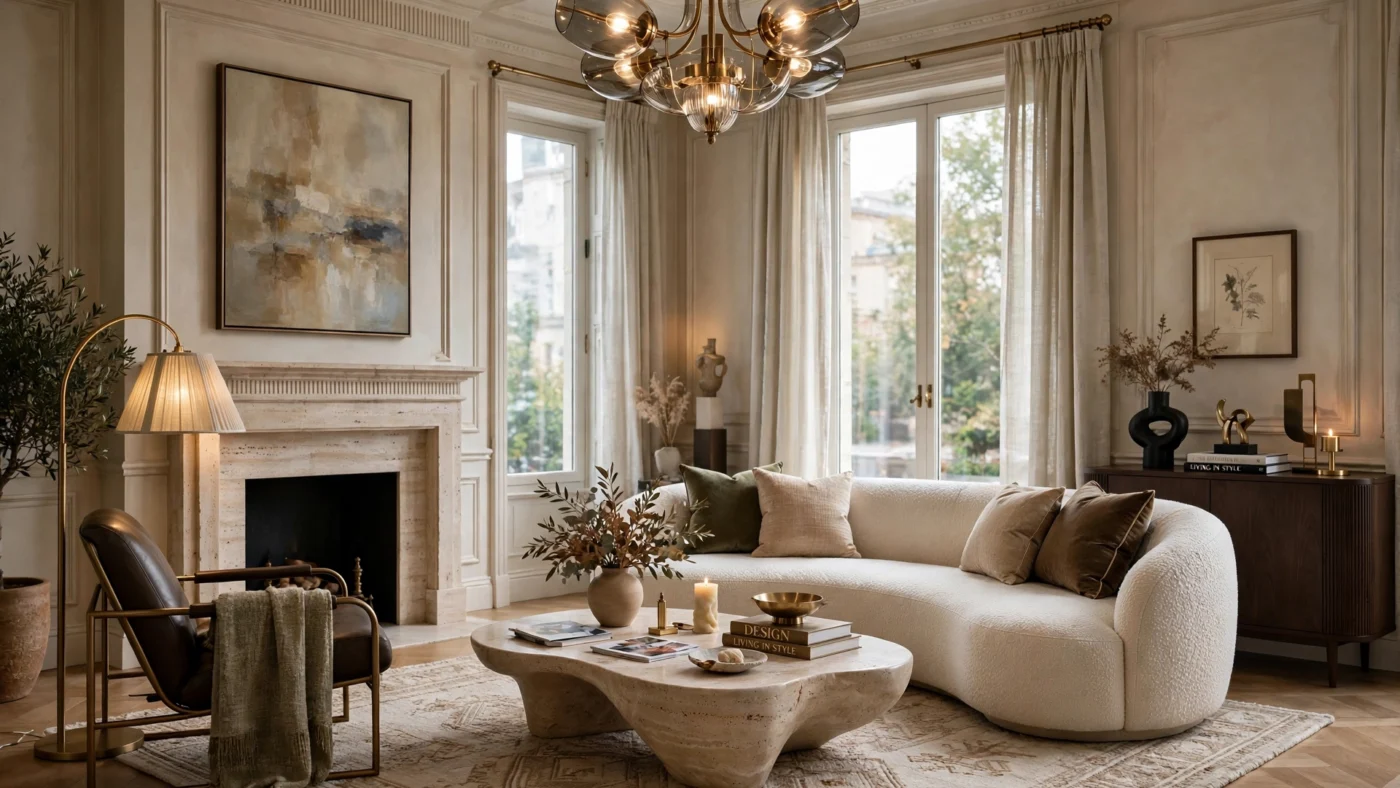
A designer-inspired living space is characterized not by how much money was spent, but by a cohesive architectural philosophy. Every room feels connected, transitions are intuitive, and the environment supports both gracious hospitality and quiet rejuvenation.
Establishing Cohesive Sightlines and Axial Harmony
Great architects design from sightlines. As you move through a home, primary hallways should culminate in compelling focal points—a bespoke bronze sculpture, a framed piece of art, or a framed window framing an ancient garden tree. This axial discipline gives a home an intuitive sense of order and serenity.
The Unified Material Palette (The Rule of Five)
A common pitfall in residential design is treating each room as a completely separate aesthetic universe. A designer-inspired home utilizes a restrained palette of no more than five foundational materials repeated consistently throughout the entire floor plan:
- Flooring: Consistent wide-plank European oak running seamlessly through public and private areas.
- Stone: A recurring marble or limestone utilized for fireplace surrounds, kitchen counters, and bathroom vanities.
- Metal: Unlacquered brass or blackened steel for all door hardware, faucets, and light fixtures.
- Wall Finish: Warm lime wash or soft ivory Roman clay throughout.
- Textiles: Neutral linen and wool accents.
Architectural Flow
Repetition of noble materials creates subconscious visual continuity, making your residence feel expansive, serene, and intentionally designed.
Balancing Intimate Scale Within Open Concepts
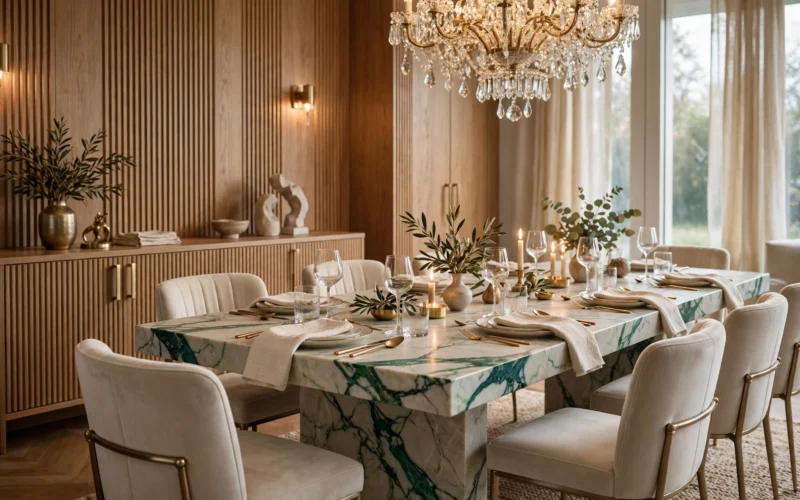
While open-plan living remains popular, cavernous rooms can feel ungrounding. Define micro-environments using architectural ceiling drops, partial fluted glass screens, or low credenzas to delineate dining, lounging, and reading zones without erecting solid walls.
Choosing Furniture for a Designer-Inspired Living Space
Once the architectural bones are in place, furniture is where a designer-inspired living space begins to feel personal rather than formulaic. The golden rule professionals follow is scale before style: measure every room and tape the footprint of each major piece on the floor before ordering anything. A sofa that is two inches too deep can choke circulation through a reading nook, while a dining table a foot too long can destroy the axial harmony you worked so hard to establish.
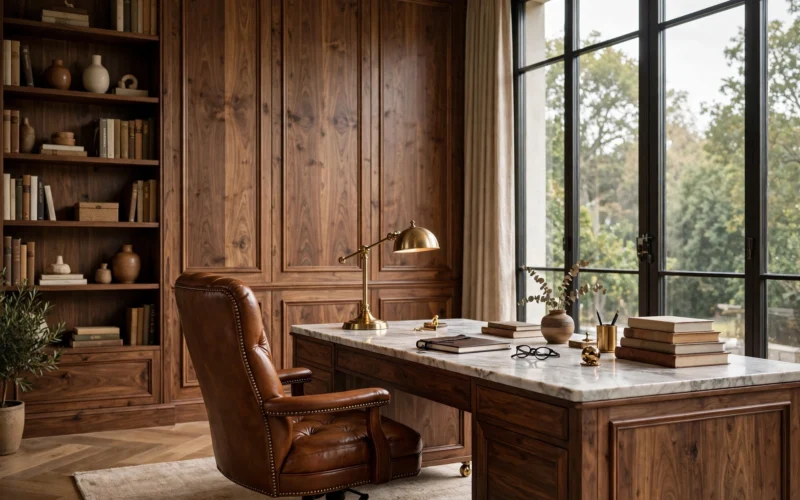
Invest in fewer, better pieces. In a thoughtfully composed interior, one beautifully crafted armchair in full-grain leather will always outperform a matching set of mediocre seating. Look for joinery you can feel — dovetailed drawers, mortise-and-tenon frames, hand-tied springs — because these details separate lasting furniture from disposable décor. Mix one or two vintage finds among contemporary pieces; the contrast creates the layered, collected-over-time feeling that defines professionally finished rooms.
Layered Lighting: The Invisible Architecture of a Designer-Inspired Living Space
Designers often call lighting the jewelry of a room, but in a truly designer-inspired living space it functions more like invisible architecture. A single overhead fixture flattens everything it touches. Instead, plan three layers in every room: ambient light for general illumination (recessed fixtures or a central chandelier on a dimmer), task light where you read, cook, or work (picture lights, sconces, and desk lamps), and accent light that grazes texture — a wall washer behind a fluted panel or a spotlight aimed at the sculpture at the end of the hallway.
Keep color temperature consistent throughout the home. A warm 2700K is the residential standard, and putting nearly every circuit on a dimmer lets you lower light levels in the evening for a cinematic rather than clinical mood. To understand how light shapes a designer-inspired living space at a deeper level, explore the overview of interior design on Wikipedia.
Common Mistakes That Undermine a Designer-Inspired Living Space
Even with the right philosophy, small missteps can dilute the effect. Watch for these frequent errors:
- Pushing all furniture against the walls. Floating seating even a few inches off the wall creates breathing room and makes conversation zones feel intentional.
- Ignoring the fifth wall. A flat white ceiling in a designer-inspired living space is a missed opportunity; consider lime wash, soft plaster tones, or subtle wallpaper to complete the envelope.
- Buying matchy-matchy sets. Purchasing the entire showroom vignette eliminates the curated tension that makes a room feel personal and collected.
- Forgetting window treatments. Bare windows or skimpy panels cheapen even expensive rooms. Hang drapery high and wide, with panels that just kiss the floor.
- Neglecting scent and sound. A quiet hum of background music and a subtle signature scent complete the sensory experience of a well-composed home.
Extending the Philosophy Beyond the Living Room
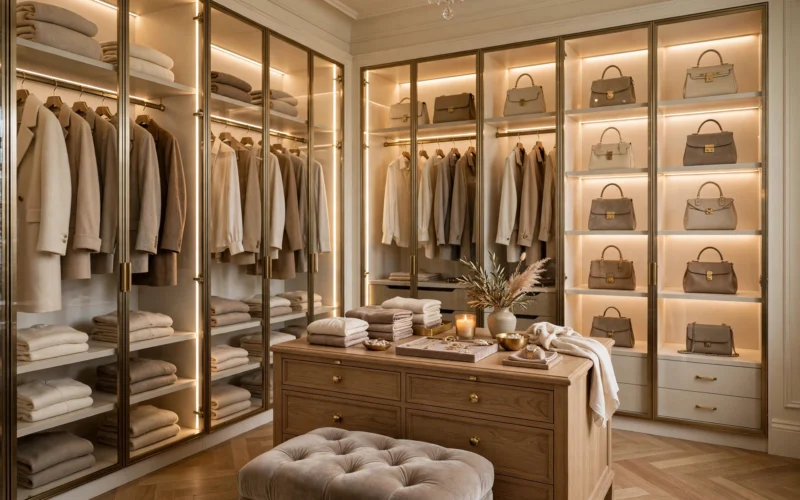
A designer-inspired living space does not stop at the living room threshold. Carry the same material palette into bedrooms, home offices, and even the mudroom so the entire home reads as one continuous thought. Repeat your unlacquered brass on a bathroom mirror frame and run the same European oak into the primary suite. This discipline is what separates a nicely decorated house from a genuinely designer-inspired living space — every door you open confirms the promise the entryway made.
Finally, remember that a designer-inspired living space is meant to be lived in, not merely looked at. Leave room for the beautiful clutter of real life: a stack of art books, a cashmere throw that is actually used, fresh flowers that will wilt by Friday. Perfection is sterile; a home with signs of life is magnetic.
Frequently Asked Questions
How much does it cost to create this look?
Less than most people assume. Because the approach relies on discipline — cohesive sightlines, a restrained palette, layered lighting — rather than expensive labels, you can achieve it at almost any budget. Spend on what you touch daily, such as seating and hardware, and save on decorative accents.
Can a rental apartment qualify?
Absolutely. Renters can apply nearly every principle here: define zones with rugs and screens, upgrade lighting with plug-in sconces and floor lamps, and introduce a unified textile palette. Removable wallpaper and tension-rod drapery deliver architectural impact without permanent changes.
How long does the transformation take?
A single room can be transformed in a weekend once you have a plan, but a whole-home project typically evolves over three to six months as you source the right pieces. Resist the urge to buy everything at once — the collected-over-time look cannot be rushed.
Do I need to hire an interior designer?
Not necessarily. Following the sightline, material-palette, and lighting principles in this guide will take you remarkably far. Consider a one-time consultation if you feel stuck on space planning — a few hours of professional eyes on your floor plan is money well spent.
Conclusion
Designer living is the art of curating an environment that quietly elevates your daily experience. With disciplined sightlines and a unified palette, your home becomes a masterpiece of cohesive tranquility.