The Best Types of Technology for a Modern Luxury Home
A foundational roadmap to the essential technology layers every contemporary luxury residence must implement for comfort, security, and sustainability.

Designing the technology infrastructure of a multi-million dollar estate requires architectural foresight. The best technologies are not piecemeal DIY accessories; they form a cohesive, enterprise-grade foundation that operates reliably 365 days a year. This is the invisible backbone of the modern luxury home — infrastructure that makes everything else possible.
Enterprise-Grade Wi-Fi 7 and Hardwired Networking
The foundation of all smart home convenience is a rock-solid data backbone. High-end estates rely on commercial-grade networking equipment (such as Cisco Meraki or UniFi Enterprise) with dual redundant fiber-optic internet feeds, Power-over-Ethernet (PoE) ceiling access points, and structured Cat6A/fiber wiring to every room. Zero buffering, seamless roaming, and impervious cyber-security are the baseline.
Centralized Smart Power and Battery Storage
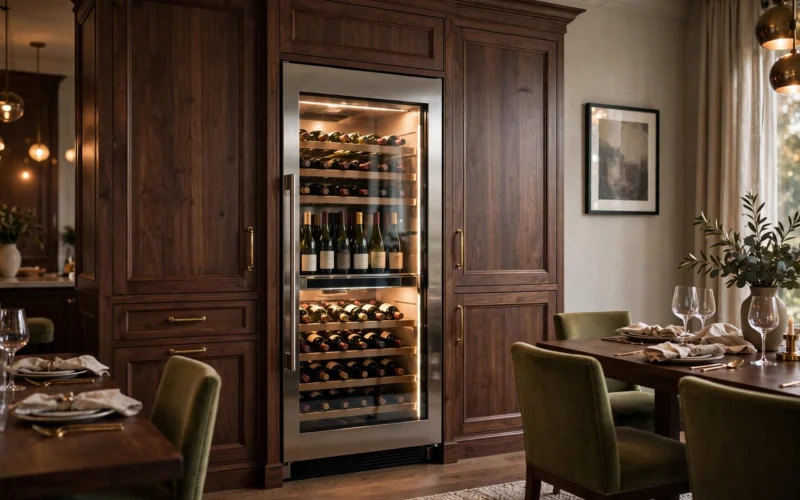
True luxury is complete energy resilience. Whole-home battery backup systems (such as Tesla Powerwall 3 or Kohler clean energy systems) paired with rooftop solar arrays guarantee uninterrupted power during municipal grid outages. The switchover occurs in milliseconds, ensuring audio systems, wine cellars, and HVAC operate without a flicker.
The Rule of Centralization
House all electronics, audio amplifiers, video matrix switches, and automation controllers in a dedicated, climate-controlled AV rack room in the basement rather than scattering equipment across living rooms.
Automated Water Leak Detection and Shutoff
Water leaks represent the number one source of catastrophic property damage in high-value residences. Whole-home intelligent flow meters (such as Flo by Moen or Phyn Plus) monitor water pressure down to microscopic drips, automatically shutting off the main water valve in seconds if a burst pipe or running toilet is detected.
How to Plan Technology for a Modern Luxury Home
When planning a modern luxury home, treat technology infrastructure like plumbing — essential, hidden, and designed before finishes are selected. Commission a technology designer to work alongside your architect from the earliest sketches, not after the plans are finalized. Map every device location, wire pathway, and equipment space directly on the architectural drawings. Specify empty conduit, not just cable, everywhere — so future standards can be pulled through without opening finished walls. Budget infrastructure at three to five percent of total construction cost; it is the cheapest phase to do correctly and the most expensive to fix later.
Prioritize the unglamorous foundations first: structured wiring, enterprise-grade networking, electrical capacity, and dedicated equipment space. These determine what your modern luxury home can become over the coming decades. Then layer the visible systems — lighting scenes, motorized shades, distributed audio — on top of that solid base. Choose open standards such as Matter and KNX so you are never locked to a single vendor’s fate.
Common Mistakes When Building a Modern Luxury Home
The costliest mistake is treating technology as an afterthought. Running cables after drywall is installed costs five to ten times more and yields compromised results. Second, underestimating power and cooling requirements. Equipment racks generate serious heat and demand dedicated circuits plus active ventilation. A modern luxury home with inadequate infrastructure is a beautiful shell built around a fragile nervous system.
Third, choosing proprietary systems that die with their manufacturer. Insist on open protocols and local control so your home keeps working regardless of any single company’s future. Finally, do not forget the human element. Even the most advanced modern luxury home needs intuitive manual controls for guests, staff, and service technicians. And document everything — as-built wiring diagrams are worth their weight in gold during future upgrades.
The Infrastructure Checklist: What to Install First
Install technology infrastructure in this order for the best results. First, structured wiring: Cat6A and fiber to every room, plus empty conduit to key locations. Second, enterprise networking: a commercial-grade router, PoE switches, and ceiling-mounted access points for seamless coverage. Third, electrical: dedicated 20-amp circuits for equipment areas and whole-home surge protection at the panel.
Fourth, centralized rack space: a ventilated, accessible location with cooling and power for all shared equipment. Fifth, water monitoring: leak detection sensors and an automatic shutoff valve installed before finishes go in. Get these five foundations right, and every future gadget — from lighting to security to entertainment — integrates effortlessly.
Frequently Asked Questions About Modern Luxury Home Technology
What technology should a modern luxury home have?
At minimum: enterprise-grade networking, integrated lighting and shade control, robust security with local processing, and energy resilience through battery storage or solar. The defining feature of a modern luxury home is not any single gadget, but the invisible infrastructure that allows everything to work together seamlessly.
How much does smart home infrastructure cost?
For new construction, budget three to five percent of total build cost for technology infrastructure, including wiring, networking, rack space, and power upgrades. For a $2 million home, that translates to roughly $60,000 to $100,000 before devices. Retrofitting an existing home costs significantly more.
Should I hire a technology designer or rely on my electrician?
Hire a dedicated technology designer. Electricians wire for power distribution; technology designers architect integrated low-voltage systems spanning network, audio, video, security, and automation. For a true modern luxury home, you need both trades working from coordinated plans.
How do I future-proof my home’s technology?
Install empty conduit everywhere, choose open standards such as Matter and KNX, prefer wired connections for fixed devices, and centralize shared equipment in an accessible rack. A well-designed modern luxury home accommodates new technology for decades without ever opening a finished wall.
For the fundamentals of intelligent buildings, see building automation on Wikipedia.
Conclusion
By investing in enterprise-grade infrastructure, clean power resilience, and proactive leak protection, your home technology serves you with steadfast reliability for decades.