Gadgets That Add Convenience Without Compromising Style
Say goodbye to unsightly black plastic cables and blinking LEDs. These stylish gadgets belong in the most discerning designer interiors.
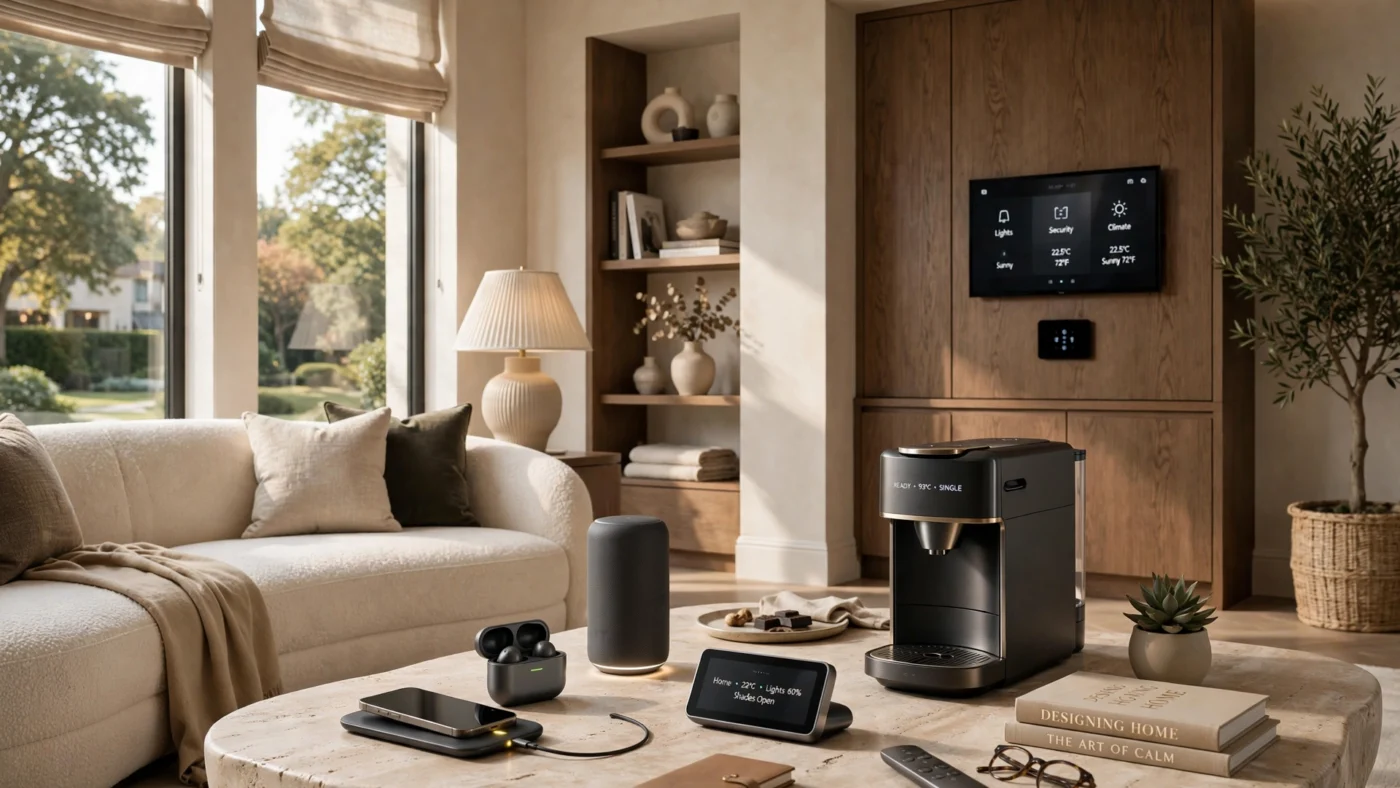
The age-old dilemma of interior design has always been technology versus aesthetics: homeowners wanted the benefits of modern electronics, but interior designers loathed the sight of plastic boxes, tangled cords, and aggressive glowing LEDs. Today, leading industrial designers are creating gadgets that celebrate aesthetic harmony. This new generation of gadgets that add convenience proves that smart technology can elevate a room rather than clutter it.
The Frame Television and Bespoke Art Displays
Monolithic black television screens dominating a formal living room can disrupt an otherwise serene design. Displays like Samsung’s The Frame (paired with custom deco-molded wood frames and an anti-glare matte finish) morph into museum-quality artwork when not in use. Complementing this, specialized 4K digital art displays from brands like Meural showcase curated oil paintings with brushstroke-level realism.
Sculptural Leather and Ceramic Wireless Charging Trays
Toss cheap plastic charging pucks aside. Artisanal tech houses like Courant craft Qi2 wireless charging pads enveloped in premium pebble-grain Italian leather, solid Belgian linen, and weighted alloy frames. Rested upon a bedside console or marble entryway credenza, they look and feel like luxury catchall trays.
Aesthetic Rule: Cord Concealment
Every electronic device must have an intentional cable management strategy. Utilize flush floor receptacles or in-wall brush plates to ensure zero cables compromise architectural sightlines.
Acoustic Table Lamps
Why clutter a side table with both a lamp and a portable speaker? Hybrid designs like the Symfonisk glass lamp or the Transloetje acoustic lanterns seamlessly combine dimmable mood lighting with room-filling wireless audio, halving the tabletop footprint while amplifying functional utility.
How to Choose Gadgets That Add Convenience for Every Room
Selecting gadgets that add convenience begins with an honest audit of your daily routines. Walk through each room and note the small frictions: the bedside table with three chargers and no free surface, the entryway where keys vanish, the kitchen counter buried under appliances.
The best purchases solve one specific, recurring annoyance rather than adding novelty for its own sake. Measure your surfaces before ordering, confirm that finishes complement your existing palette of wood, stone, or metal, and check power requirements so you are not drilling new outlets into finished walls.
Prioritize versatility. A sculptural charging tray that also serves as a valet for watches and keys earns its footprint, while a single-purpose plastic dock rarely does. Look for gadgets that add convenience across multiple moments of the day — for example, an acoustic lamp that provides reading light at night and background music during dinner. When possible, choose designs from makers who publish repair guides and offer replacement parts; luxury should mean longevity, not disposability.
Common Mistakes When Buying Gadgets That Add Convenience
The most frequent error is buying for specifications instead of for the room. A 200-watt speaker is wasted in a 150-square-foot study, and an oversized display overwhelms a reading nook.
Another common mistake is ignoring cable reality: even wireless devices need occasional charging, so plan a concealed charging drawer or a floor outlet before the gadget arrives.
Finally, resist mixing too many control ecosystems. Gadgets that add convenience should reduce the number of apps on your phone, not increase it, so standardize on one platform — such as Matter, HomeKit, or Google Home — before expanding your collection.
Styling Tips: Making Technology Disappear Into Your Decor
Placement determines whether a device reads as clutter or as curated decor. Group small devices on trays to create a single visual moment rather than scattered objects. Match metal finishes to your hardware — brass chargers with brass drawer pulls, matte black speakers with blackened steel shelving.
Use the design vocabulary of your home as a filter: a farmhouse kitchen welcomes ceramic and linen textures, while a minimalist loft calls for brushed aluminum and smoked glass. When a device cannot be beautiful, hide it well — ventilated cabinets, behind-panel mounts, and motorized lifts keep performance accessible and sightlines clean.
Frequently Asked Questions About Gadgets That Add Convenience
Do stylish gadgets perform as well as standard tech?
In most cases, yes. Design-led brands increasingly license the same Qi2 charging coils, Bluetooth 5.3 radios, and driver components used by mainstream manufacturers, then wrap them in premium materials. The difference is rarely performance; it is fit, finish, and acoustic tuning. Read independent measurements rather than marketing copy when audio fidelity or charging speed matters.
How much should I budget for gadgets that add convenience?
Expect to pay a 30 to 60 percent premium over mass-market equivalents. A designer charging tray typically runs $80–$180, acoustic lamps $250–$600, and art-mode displays $1,000–$3,000 depending on size. Budget per room rather than per device, and upgrade the pieces you touch daily first.
Will these gadgets work with my existing smart home system?
Most premium devices support at least one major platform, and Matter-compatible gadgets that add convenience are increasingly common, allowing cross-platform control from a single app. Before buying, verify compatibility with your voice assistant and existing automations on the manufacturer’s specifications page.
How do I keep designer tech looking new?
Leather and linen finishes benefit from occasional conditioning and dusting with a dry microfiber cloth; avoid alcohol-based cleaners on ceramic glazes. Keep firmware updated so features improve over time, and store original packaging for resale value — well-kept designer tech holds its value remarkably well.
To explore the philosophy behind objects that are both useful and beautiful, read more about industrial design on Wikipedia.
Conclusion
You no longer have to choose between cutting-edge convenience and high aesthetic standards. Today’s premier gadgets honor both with poise and craftsmanship.