Designer Tech Accessories: The Ultimate Luxury Guide
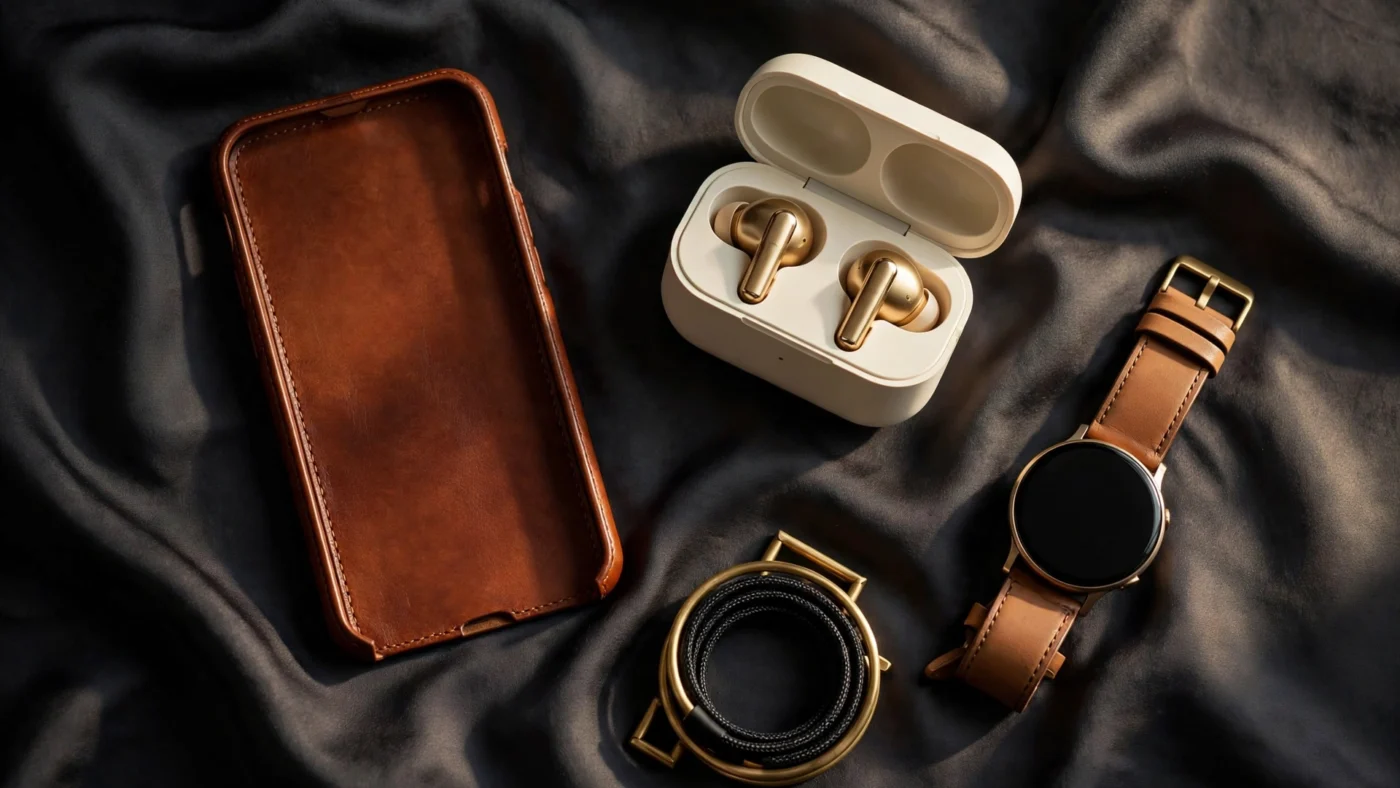
There is a quiet moment that happens when you place your phone on a restaurant table, or pull your laptop out in a client meeting, or take a call on your earbuds in a first-class cabin. People notice the details. The grain of the leather on your phone case. The weight of the metal on your charging stand. The way everything you carry looks like it belongs together, like it was chosen rather than accumulated.
That is what designer tech accessories are really about. Not showing off a logo. Not spending more for the sake of it. Just the decision that the objects you touch dozens of times a day deserve the same thoughtfulness as the clothes you wear and the home you live in.
This guide walks through what makes a tech accessory genuinely “designer,” the essential categories worth investing in, how to choose pieces that fit your life, and how to care for them so they age the way good luxury should — gracefully.
What Actually Makes a Tech Accessory “Designer”?
The word gets thrown around a lot, especially on marketplace listings where “designer-style” can mean almost anything. In the real luxury sense, a designer tech accessory earns the label through a handful of qualities that are surprisingly easy to spot once you know what to look for.
Materials first
This is the single biggest divide. Mass-market accessories lean on hard plastics and printed patterns that peel within months. Designer pieces start with honest materials: full-grain or top-grain leather, brushed or anodized aluminum, brass, solid marble, woven technical fabrics, sometimes even wood or carbon fiber. You can feel the difference in the first five seconds of holding it. The material has weight, texture, and a finish that does not look tired after a week of use. When a brand names its materials openly — the grade of leather, the type of metal, the source of the fabric — that transparency is itself a sign you are looking at the real thing.
Craft and brand heritage
Many of the strongest names in this space come from leather goods and fashion houses that applied their existing craft to technology: companies known for handbags and briefcases that learned to cut leather for a phone, or hardware brands obsessed with precision machining. Their advantage is not a logo but a century (or decades) of learning how materials behave — how leather stretches, how metal wears, how stitching holds. A fashion-tech collaboration, like the long-running partnership between Apple and Hermès on watch bands, exists precisely because both sides bring something the other cannot fake.
Design, not decoration
A truly designed accessory solves a problem elegantly rather than dressing a cheap one up. The cable that wraps neatly because it was engineered to, the folio case whose card slots sit exactly where your fingers expect, the laptop sleeve that opens flat on a desk — these are design decisions, not decorations. When you are shopping, look past the surface pattern and ask: does this work better than the generic version, or just look busier? The best designer pieces almost always answer the first way.
The Essential Categories of Designer Tech Accessories
You do not need everything at once. Start with the pieces you interact with most, and build a collection the way you would build a wardrobe — one considered addition at a time.
Leather phone cases and folios
The phone case is the entry point for most people, and it is the item the world sees most. Designer phone cases typically fall into two camps: slim snap-on or wraparound cases in leather or technical fabric for minimalists, and folio or wallet-style cases for people who want to leave the separate wallet behind. Look for cases with precise button cutouts, a raised edge around the camera lenses, and compatibility with wireless charging so you never have to remove the case at your desk. Good leather develops a patina over months; cheap coated “leather-like” material cracks instead. That difference is worth paying for, because you will see and touch this object every single day.
Earbud and headphone cases
Wireless earbuds live loose in bags and pockets, and their tiny charging cases scratch easily — which is why a protective sleeve is one of the highest-value upgrades you can buy. Designer versions come in leather, quilted fabric, and metal-edged designs, often with a small clip or carabiner so the case hangs from a bag strap. For over-ear headphones, a molded travel case in leather or technical fabric protects the headband and earcups on long trips. These small pieces are also where design houses get playful: patterned linings, signature hardware, monogramming options.
Laptop sleeves, bags, and organizers
Your laptop bag is arguably the most visible tech accessory you own — it is effectively your briefcase. Designer laptop sleeves use padded, structured shells rather than floppy neoprene, with magnetic or zip closures that keep the device from sliding out. For commuters, a proper tech tote or messenger bag with a padded laptop compartment, cable organizer pockets, and a sleeve that fits a tablet too replaces three separate purchases. And do not overlook small organizers: leather tech dopp kits and cable pouches with individual slots for chargers, drives, and adapters turn a tangled bag into a calm one. The calm is the point.
Watch bands and charging docks
The smartwatch is the rare gadget that is also jewelry, so the band matters as much as the watch itself. Designer bands in leather, woven textile, or metal link styles transform the same watch from gym gear to evening wear in about thirty seconds. At home, the charging dock earns its place: a solid metal or marble stand that holds your watch and phone upright looks intentional on a nightstand, where a tangle of white cables looks like an afterthought. This is the category where design-led brands truly shine, since a dock is pure form-plus-function.
Cables, chargers, and desk essentials
The least glamorous category, and often the most transformative. A braided or leather-wrapped charging cable with reinforced strain relief outlasts a generic cable many times over and looks dramatically better doing it. Compact multi-port chargers with a considered finish replace the plastic brick. Desk mats in leather or felt, monitor stands, and phone stands in metal or wood turn a workspace from cluttered to composed. These are the pieces nobody compliments directly — they simply make everything around them look better, which is the quiet definition of good design.
How to Choose Designer Tech Accessories That Suit You
Before you buy anything, run through this checklist. It takes five minutes and saves you from a drawer of regretted purchases.
- Match your actual devices. Measure twice. Laptop sleeves, watch bands, and earbud cases are model-specific, and sizing varies more than you expect. Check the maker’s compatibility list rather than guessing from a photo.
- Buy for your routine, not your fantasy. A folio case is brilliant for a commuter who carries cards everywhere and pointless for someone whose phone lives on a desk. Be honest about how you actually move through the day.
- Feel the weight and bulk. Designer materials add presence, but a phone case should not turn your phone into a brick. If you cannot try it in person, read reviews that mention weight and pocket fit.
- Look for repairability and warranty. The best makers stand behind their work with multi-year warranties or repair programs. A lifetime or multi-year guarantee is a strong signal that the brand expects its product to last.
- Prefer versatility over novelty. Neutral colors and classic materials coordinate with everything you own and everything you will own. Save the bold pattern for one small piece, like an earbud case, rather than the big-ticket bag.
- Consider sustainability. More brands now use recycled, plant-based, or responsibly sourced materials and say so plainly. It is worth favoring makers who publish what their products are made from.
- Beware of counterfeits. If a “designer” piece costs a tenth of the brand’s usual price and ships from an anonymous seller, it is not a bargain — it is a fake, and fakes never age gracefully.
Styling Your Tech Like Fashion
Here is the part nobody tells you: designer tech accessories work best when you treat them as part of your wardrobe rather than a separate category. A few principles carry over directly.
Coordinate, do not match. Your phone case, watch band, and bag do not need to be the same color or brand — that reads as a uniform. Instead, stay within a palette: warm browns and tans together, or blacks and grays, or a single accent color repeated once or twice. The same rule that governs a good outfit governs a good desk.
Let one piece be the statement. If your bag is a bold, structured piece, keep the phone case quiet. If your watch band is the star, keep the dock minimal. One focal point per setup is the difference between curated and cluttered.
Dress your devices for the occasion. Swap a leather band for a sport band before the gym. Move from a bold case to a slim one for formal events. It takes seconds and it is the tech equivalent of changing shoes.
Consider your home as the frame. Your devices live on your desk, your nightstand, and your coffee table. A beautifully stylish technology that belongs in a luxury home extends the same design language from your wardrobe into your living space — the materials on your desk should rhyme with the materials in your room.
Care Tips So Your Accessories Age Gracefully
Luxury materials reward a little attention. None of this is difficult; it is the equivalent of polishing shoes.
- Leather: wipe down occasionally with a dry or slightly damp cloth, condition it a few times a year with a quality leather conditioner, and keep it out of prolonged direct sunlight and standing water. Scratches on good leather often buff out; cracks on cheap material never do.
- Metal: a soft microfiber cloth keeps aluminum and brass free of fingerprints and smudges. Avoid abrasive cleaners that strip anodized finishes.
- Fabric and woven materials: spot-clean with mild soap and water; a lint roller handles everyday dust. Let them air dry fully before use.
- General rule: store unused accessories rather than tossing them in a drawer with keys and coins, which is how most scratches happen. And if a brand offers repairs — many of the good ones do — use the service instead of replacing the piece. That is what the warranty is for.
Frequently Asked Questions
Are designer tech accessories actually worth the money?
They can be, for the right pieces. You are paying for better materials, better construction, and often a warranty or repair program — which means a well-made leather case or bag can outlast three cheap replacements. The value is strongest in the items you use and see daily: phone cases, bags, watch bands. For something you barely notice, like a cable you keep in a drawer, the premium is harder to justify.
What is the difference between designer tech accessories and regular ones?
Three things: materials, construction, and intent. Designer accessories use higher-grade materials (real leather, metal, woven technical fabrics), are built with tighter tolerances and better finishing, and are designed as fashion objects — meant to look good aging, not just survive shipping. Regular accessories are optimized for price and usually look tired within months.
Which designer tech accessories should I buy first?
Start with the phone case, since it is the object you touch and display most. Next, a laptop bag or sleeve if you commute, because it is your most visible carry piece. Then small upgrades with big daily impact: an earbud case, a proper charging cable, and a desk stand. Build one piece at a time rather than buying a matching set all at once.
How do I spot fake designer tech accessories?
Check the price against the brand’s official store — dramatic discounts on current items are a red flag. Look at stitching quality, material smell (real leather smells like leather, fakes smell like plastic), hardware weight, and packaging. Buy from the brand directly or from established retailers rather than anonymous marketplace sellers. When in doubt, compare product photos side by side with the official listing.
Do designer tech accessories work with wireless charging and MagSafe?
Most well-made cases do, and reputable brands state compatibility clearly in the product description. The general rule: slim cases in leather or fabric rarely interfere with wireless charging, while very thick cases, metal plates, or bulky decorative elements can. If wireless charging matters to you, confirm compatibility before buying rather than discovering the problem at your nightstand.
The Takeaway
Designer tech accessories are not about the logo on the back of your phone. They are about a simple idea: the objects you use every day should be as considered as everything else in a well-lived life. Start with one piece you will touch constantly — the case, the band, the bag — choose it for materials and craft rather than decoration, and let it set the standard for everything that follows. Your desk, your bag, and your daily routine will all look better for it. And when you are ready to think bigger, our guides to high-end home gadgets worth knowing about and premium smart devices for modern living carry the same philosophy from your pocket into the rest of your home.