How to Make Your Home Look More Expensive
Unlock the high-end interior designer secrets that impart immediate estate-level prestige without unnecessary architectural demolition.
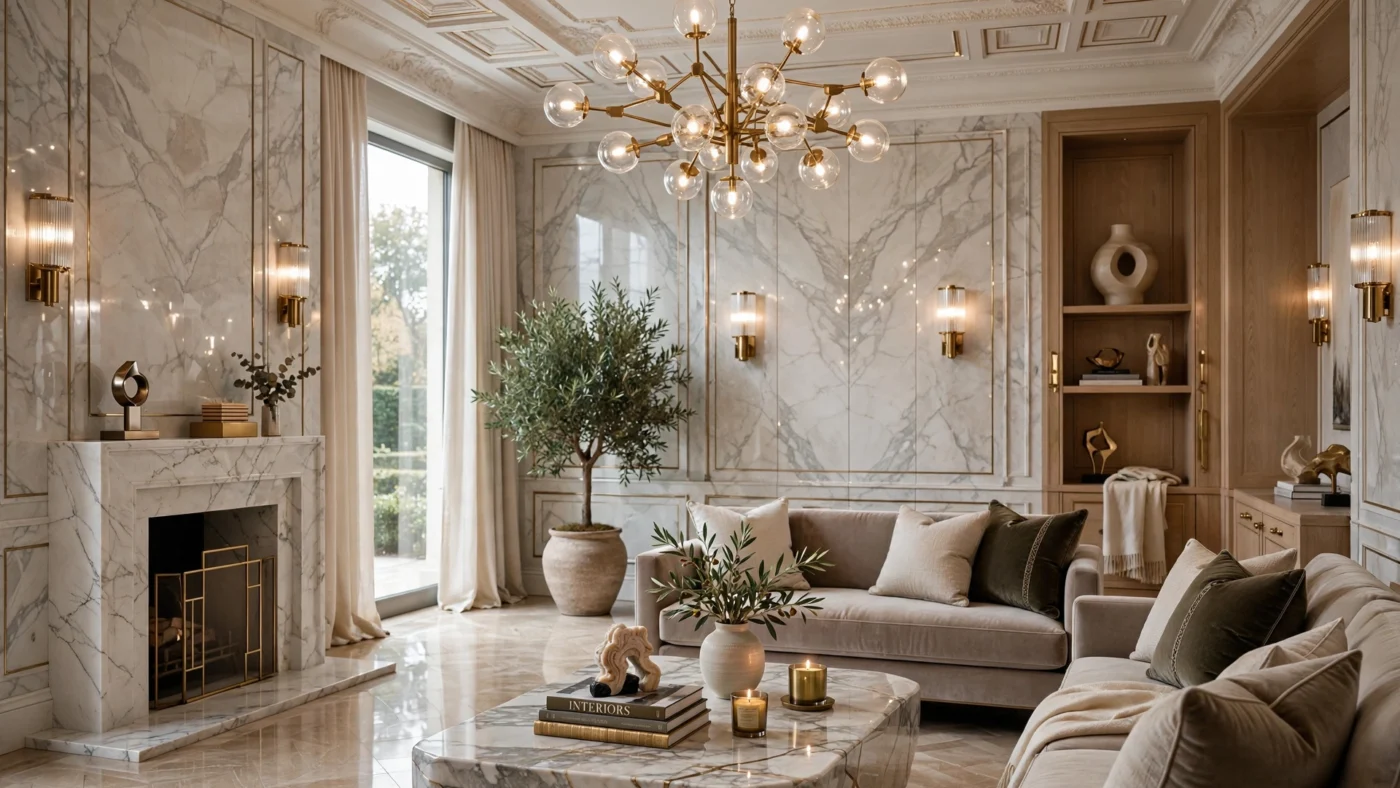
Want to make your home look more expensive without the seven-figure renovation? It comes down to a handful of high-impact details — the finishes you touch, the sightlines you see, and the discipline of what you leave out. These are the exact upgrades designers specify to make any space read as far more valuable than it cost to create.
The distinction between a standard interior and one that exudes exceptional value often hinges upon subtle sensory cues that escape the untrained eye. Designers utilize a specific set of high-leverage modifications that instantly elevate perceived luxury.
Upgrading Switchgear and Electrical Plates
Few details cheapen a room faster than flimsy plastic switch plates. Replacing standard toggle covers with heavy cast-brass, forged iron, or screwless matte charcoal switches from luxury manufacturers like Forbes & Lomax or Buster + Punch produces an immediate tactile elevation every time you enter a room.
Eliminating Clutter from Visual Sightlines
Expensive homes are distinguished by their disciplined sightlines. Stand in your entryway and look through into adjacent rooms. Are cords, charging cables, mail stacks, or utilitarian items interrupting the vista? Concealing electronics in custom cabinetry, routing wires behind wall channels, and maintaining clean architectural axes immediately projects tranquility.
The Oversized Scale Secret
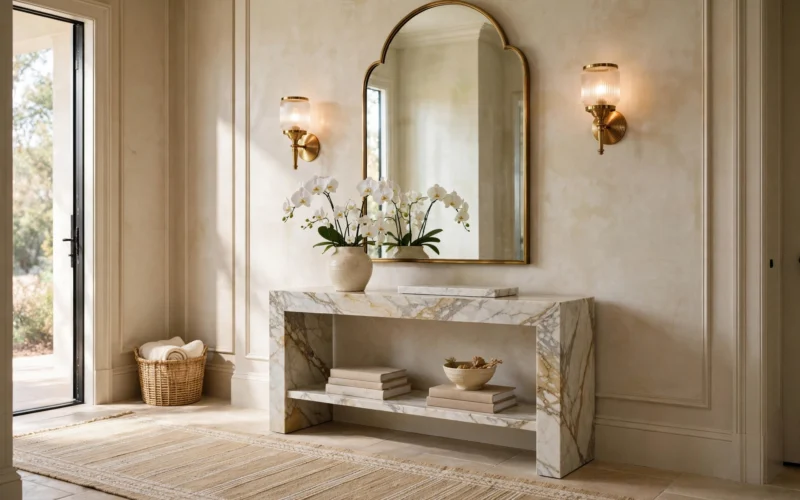
When in doubt, choose fewer items of substantially larger scale. A single 48-inch round stone mirror above a console makes an infinitely more powerful statement than three smaller framed prints.
Upgrading Architectural Paint Finishes
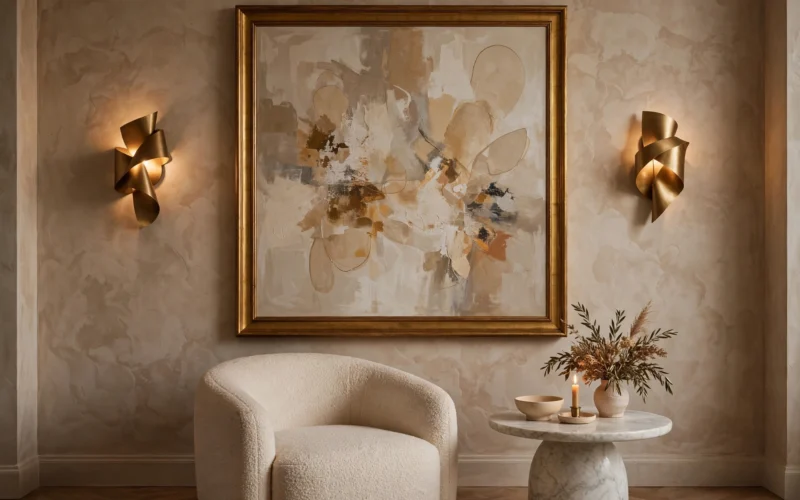
Standard builder flat paint can appear chalky and lifeless. Upgrading primary living walls to artisanal finishes such as mineral lime wash, Roman clay, or subtle micro-cement creates a dynamic surface that captures changing daylight with velvet-like nuance. For ceiling planes, a high-lacquer reflective enamel finish in formal dining rooms visually doubles vertical height and reflects chandelier sparkle.
Custom Framing with Generous Matting
Elevate any artwork or photography by utilizing professional custom archival framing with extra-wide (4 to 5 inch) acid-free museum white mats and anti-reflective museum glass. The generous white border commands focus and accords ordinary prints the visual gravity of a blue-chip gallery exhibition.
Conclusion
True luxury does not require ostentatious gold leaf or excessive ornament. It is achieved through intentional editing, substantial hardware, refined wall finishes, and serene visual sightlines.
Textiles: The Fastest Way to Make Rooms Look More Expensive
No single change alters perceived value like textiles. Floor-to-ceiling drapery in a natural fabric adds architectural height overnight; a thick, properly sized rug grounds the room and hushes echo; layered bedding — crisp cotton, a wool throw, linen shams — makes any bedroom feel like a boutique hotel. These are the surfaces cameras and guests register first.
The rule is simple: go bigger and more natural than you think. Curtains should kiss the floor, rugs should reach under furniture legs, and throws should look touchable. Rooms that look more expensive always feel soft underfoot and around the windows — never bare, never scratchy.
Lighting Upgrades That Fake a Bigger Budget
Lighting is the cheapest way to make any room look more expensive. Replace harsh overheads with layered sources — floor lamps, table lamps, picture lights — all on dimmers, all 2700K. Suddenly the same room glows like a restaurant instead of glaring like an office.
Then add one moment of drama: a single chandelier with real presence over the dining table, or sculptural pendants flanking the bed. Statement lighting reads as custom and considered, and vintage or emerging-designer pieces deliver the look without the gallery price.
Hardware and Fixtures: Small Swaps, Massive Impact
Hands touch hardware dozens of times a day, which is why cheap handles betray an otherwise lovely room. Swap hollow pulls for solid brass or bronze, replace the builder faucet with one sculptural tap, and upgrade door levers to weighty, well-made designs. Each swap takes minutes; together they rewire how solid the whole house feels — the quiet mechanics that make a house look more expensive.
Extend the logic to the bathroom: a stone soap dispenser instead of plastic packaging, matching metal finishes, thick white towels rolled like a spa. Guests judge luxury in bathrooms and kitchens more harshly than anywhere else — make those rooms airtight.
Styling Tricks Stagers Use to Make Homes Look More Expensive
Professional stagers make homes look more expensive with ruthless editing: clear every surface to half its objects, group what remains in odd numbers, and leave genuine negative space. Add height with tall branches or sculptural vases, warmth with a lit candle and a cashmere throw, and life with fresh flowers or a bowl of citrus.
Finish with scent and symmetry. A consistent home fragrance — vetiver, fig, cedar — signals luxury before the eye focuses, and balanced pairs of lamps or art read as intentional and calm. None of this is expensive; all of it photographs as wealth.
Look More Expensive: Frequently Asked Questions
What is the single cheapest way to make my home look expensive?
Declutter and clean the sightlines. Removing visual noise costs nothing and instantly makes every remaining object — and the architecture itself — look more valuable. Homes that look more expensive are always edited first.
Does paint really make a home look more expensive?
Yes — color depth and finish quality are dead giveaways. Rich, complex neutrals in matte or eggshell read as custom; flat stark white reads as rental. Repainting the main living areas is the highest-ROI cosmetic upgrade there is.
Can I mix high and low pieces successfully?
That is exactly how designers do it. Anchor each room with one genuinely good piece, then fill in with affordable finds. The eye averages upward: one beautiful chair elevates everything around it.
How important is symmetry for an expensive look?
Very — the human brain reads symmetry as order and intention. You need not be rigid, but balanced pairs of lamps, art, or chairs create the calm, resolved feeling that defines expensive interiors.