Luxury Bathroom Design Ideas That Feel Truly High-End
These luxury bathroom design ideas start from a simple truth: the bathroom is the room you use when nobody is watching. First thing in the morning, last thing at night, it is where the day begins and where it quietly ends. A genuinely luxurious bathroom understands this. It does not perform luxury for guests the way a living room does; it gives it back to you, twice a day, in hot water, soft light, and surfaces that feel good under your feet.
This guide is about exactly that: the difference between a bathroom that photographs well and one that feels like a private spa every time you step in. We will cover the layouts, materials, lighting, and details that make a bathroom feel truly high-end — plus how to plan a remodel without the usual regrets.
What Actually Makes a Bathroom Feel Luxurious
Before the ideas, the principle. Luxury bathrooms are rarely luxurious because of one expensive item. They feel that way because of four quiet things done right:
- Space, or the illusion of it. Clear floor area, frameless glass instead of curtains, large-format tile with minimal grout lines. The eye reads “room to breathe” as luxury instantly.
- Light, layered. Harsh overhead light is the fastest way to make expensive materials look cheap. Luxury bathrooms layer light: soft ambient, flattering mirror light, and a low evening glow.
- Materials with weight. Real stone, solid brass, warm wood. Materials that are cool, smooth, or heavy in the hand tell your senses the room was built, not assembled.
- Quiet. Soft-close everything, solid doors, a fan you cannot hear. Luxury is the absence of small irritations as much as the presence of beauty.
Hold these four ideas in mind and every choice below becomes easier.
1. Make the Freestanding Soaking Tub the Centerpiece
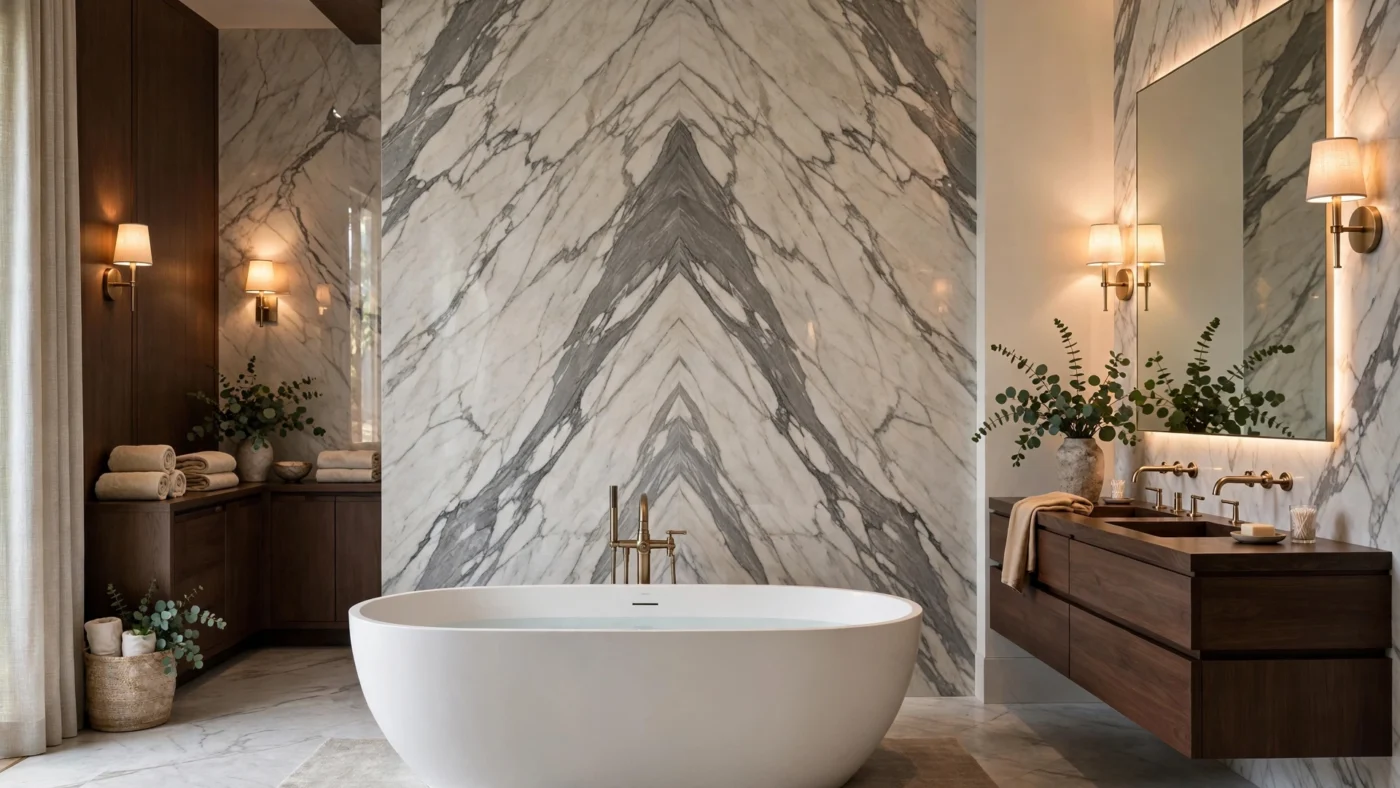
A freestanding tub is the single fastest signal of a luxury bathroom. An alcove tub reads functional; a sculptural tub placed under a window or on a slightly raised platform reads intentional. Position it where you can see it from the doorway — the tub becomes the room’s anchor the way a fireplace anchors a living room.
What matters more than the tub’s price is its surroundings: give it clear space on at least two sides, run a slim floor-mounted filler in a warm metal finish, and keep the sightline clean. Pair it with a small stone side table for a book and a cup of tea. That one vignette tells the whole story.
2. Build a Walk-In Shower Worth Lingering In
The modern luxury shower has no door, no curb, and no visual clutter. A single fixed glass panel contains the water while the floor flows straight through. Inside, think generously: a rainfall head overhead, a handheld wand on a slide bar for rinsing, and — the detail that separates good from great — body sprays or a steam function if the budget stretches.
Do not forget the practical luxuries: a recessed niche for bottles instead of a plastic caddy, a small built-in bench in stone, and a linear drain that disappears into the floor. These are the things your guests will notice without knowing why the shower feels so right.
3. Use Book-Matched Marble as the Statement Wall
One wall of book-matched stone — two slabs mirrored so the veining opens like a butterfly — is the classic five-star hotel move, and it works in a home bathroom at any scale. The shower wall or the wall behind a floating vanity are the natural candidates.
A word of honest advice: stone with dramatic veining is a commitment. Choose the slab in person or at least approve photos of the exact slabs, because veining varies enormously. And in a wet zone, make sure the stone is sealed properly at installation — beautiful marble that stains in year one is not a luxury, it is a regret.
4. Choose Warm Metal Finishes, Not Chrome
Chrome is fine; it is also what every builder-grade bathroom has. Warm metals — brushed brass, unlacquered bronze, champagne bronze — read immediately as chosen rather than default. Use one finish consistently across faucets, shower trim, towel bars, and even the mirror frame.
Unlacquered brass deserves special mention: it develops a living patina over time, darkening in the places you touch. Some people love this; some do not. If you want the warm look without the change, choose a sealed or “brushed gold” finish that stays put.
5. Layer the Lighting Like a Spa
This is where most bathrooms fail. One bright ceiling fixture flatters nobody. Instead:
- Ambient: a dimmable ceiling light or, better, cove lighting hidden above a dropped ceiling section for a soft wash.
- Task: vertical sconces flanking the mirror at face height. Light from the sides flatters the face; light from above casts shadows.
- Accent: a low glow under a floating vanity, inside a shower niche, or behind a freestanding tub. At night, the accent layer alone should be enough light to move around by.
Put everything on dimmers. The ability to turn a bright morning bathroom into a candle-lit-feeling soak at night costs almost nothing during a remodel and changes everything.
6. Float the Vanity
A wall-hung vanity with open space beneath it makes the floor read continuous, which makes the whole room feel larger. It also makes cleaning underneath trivial, which is the kind of everyday ease that luxury is quietly made of.
Choose a vanity with real storage — deep drawers with dividers for hair tools and bottles, not just a pretty front. The luxury version of a vanity is not the one with the fanciest handles; it is the one where nothing has to sit on the counter. Counter space you do not need to use is a design statement in itself.
7. Warm the Floors and the Towels
Heated bathroom floors sound extravagant until you step onto one in January. Electric radiant mats under tile are one of the most common upgrades in high-end remodels for a simple reason: the floor is the largest surface you touch with bare skin every day. Pair it with a heated towel rail so the towel that meets you after the shower is warm too.
These are invisible luxuries. Nobody photographs them. But they are the ones you will think about every single morning.
8. Add One Spa Ritual You Will Actually Use
A steam shower, a deep Japanese-style soaking tub, a small sauna bench tucked into a corner of a large bathroom, a cold plunge for the committed — pick ONE ritual amenity and commit to it properly. The mistake is collecting half-hearted versions of several: a steam generator too small for the enclosure, a sauna bench that is really just a chair.
Honest guidance: match the amenity to your habits. If you take twenty-minute showers, a steam function will transform your life. If you take baths, put every spare dollar into the tub and its surround. Luxury is personal; the right indulgence is the one you will use four times a week.
9. Sweat the Quiet Details
Finally, the details that separate a luxury bathroom from an expensive one:
- Frameless glass on the shower — thicker glass (10–12mm) with minimal hardware.
- Soft-close toilet seats, drawers, and doors throughout.
- A silent, powerful exhaust fan — sized for the room, run on a timer so it does its work after you leave.
- Concealed storage for cleaning supplies and laundry so nothing utilitarian is visible.
- A real mirror, properly sized — as wide as the vanity, with clean edges and no medicine-cabinet bulk unless you need the storage.
None of these photograph dramatically. All of them are what a designer means by “it just feels right.”
Materials That Read Expensive in a Bathroom
Our deeper guide to materials that instantly make a room feel more luxurious applies here with bathroom-specific notes:
- Stone: marble, travertine, or limestone for walls and floors; use large-format tiles to reduce grout lines.
- Wood: teak or thermally treated wood for vanities and benches — the warmth of wood against stone is what keeps a marble bathroom from feeling cold.
- Metal: solid brass or bronze fixtures; avoid hollow-feeling handles.
- Glass and mirror: generous, clean, and frameless where possible.
The rule of three applies: pick three main materials and repeat them. A bathroom with stone, warm wood, and brass looks composed. A bathroom with seven finishes looks busy, no matter what each cost.
Planning a Luxury Bathroom Remodel Without Regrets
Good design dies in bad planning. A few honest notes from how these projects actually go:
- Start with the plumbing. Moving a toilet or shower drain is the single biggest cost driver. If your layout works, keep the wet fixtures where they are and spend the savings on finishes.
- Ventilation is non-negotiable. Steam destroys beautiful bathrooms. Size the fan for the room volume and vent it properly to the outside, not into the attic.
- Waterproofing before beauty. Tanking membranes, sloped shower floors, sealed niches — the invisible work is what keeps a luxury bathroom luxurious in year five.
- Order materials early. Stone slabs, custom vanities, and specialty fixtures have lead times. The remodel that stalls for six weeks waiting for a vanity is a classic and avoidable story.
- Live with the lighting plan. Before finalizing, tape the sconce positions on the wall and stand in the room at night with a flashlight at that height. Five minutes of this saves years of “the mirror light is wrong.”
For the rest of the home, our luxury bedroom design ideas for modern homes pair naturally — an en-suite bathroom should feel like a continuation of the bedroom, not a different house.
Frequently Asked Questions
How much does a luxury bathroom remodel cost?
There is no single honest number — cost depends on the room’s size, your region, and how much plumbing moves. The biggest cost drivers are relocating drains and supply lines, the amount of natural stone, custom versus ready-made vanities, and labor rates in your area. As a planning rule: get three itemized quotes from licensed remodelers, and keep a 15–20% contingency. The cheapest quote for a complex bathroom is rarely the cheapest project.
How long does a luxury bathroom remodel take?
A straightforward refresh (fixtures, tile, vanity, no plumbing moves) typically runs a few weeks of active work. A full gut remodel with layout changes, custom stonework, and specialty trades usually takes several weeks to a few months, plus material lead times. The most common delay is materials arriving late — order stone, vanities, and fixtures before demolition starts.
What is the most luxurious bathroom layout?
The layout that gives the tub and the shower each their own breathing room. In a larger bathroom, a wet-room style space with a freestanding tub and a generous walk-in shower feels the most high-end. In a smaller bathroom, one excellent shower with frameless glass and a floating vanity beats a cramped tub-plus-shower combination every time.
Which materials are best for a luxury bathroom?
Natural stone (marble, travertine, limestone) for surfaces, warm solid metals (brass, bronze) for fixtures, and wood (teak or thermally modified) for warmth. In wet zones, prioritize proper sealing and slip resistance — polished marble on a shower floor is beautiful and treacherous; use honed finishes or smaller tiles with more grout for grip.
How can I make a small bathroom feel luxurious?
Three moves do most of the work: a large mirror or mirrored wall to double the light, a floating vanity and wall-hung toilet to show more floor, and frameless glass on the shower to remove visual barriers. Then spend on what you touch — one excellent faucet, soft layered light, and heated floors — rather than on square footage you do not have. Our luxury lighting ideas show how light alone can transform a compact space.
The Bottom Line
A luxury bathroom is not a checklist of expensive things. It is a room designed around how you actually begin and end your days: warm underfoot, flattering in the mirror, quiet, and calm. Get the light right, choose three honest materials, float the vanity, and add one ritual amenity you will genuinely use. Do that, and the room will feel high-end every single morning — which is the only review that matters.